Spain's Roman Catholic Church has reached an agreement with the government to compensate victims of sexual abuse by members of the clergy.
The accord follows complaints that religious leaders had failed to tackle the issue adequately. It allows the government to manage possible compensation in coordination with the Church, addressing cases where other legal avenues are no longer available due to time limits or the death of the accused.
Hundreds of thousands of Spaniards are estimated to have suffered sexual abuse at the hands of Church figures. The move aligns with similar redress schemes for abuse victims in other nations.
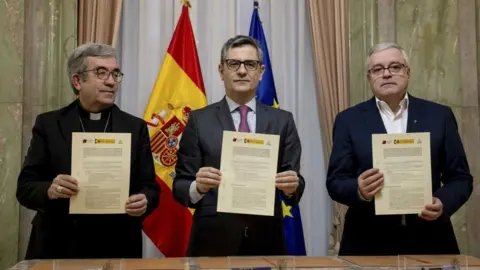
Justice Minister Félix Bolaños emphasized the necessity of the agreement, stating, A democracy should not allow the existence of victims who have never been compensated and that it seeks to pay off an historic, moral debt with victims of abuse within the Church.
The signing also included Luis Argüello, president of the Episcopal Conference, and Jesús Díaz Sariego, president of Confer, highlighting the unprecedented nature of this initiative in addressing crimes past the statute of limitations.
Research by the Spanish ombudsman's office indicates that approximately 1.1% of the population, or 440,000 people, may have suffered abuse by clergy, a figure contested by the Church.
While the Church previously established its own compensation framework, dissatisfaction emerged regarding its transparency and effectiveness. Critics and victims' groups claim they were excluded from participation in that scheme, prompting the involvement of the Vatican.
Under this new system, victims can file cases with a newly established agency, which will propose reparations managed by the government. Compensation may be symbolic, psychological, or economic, although specific financial amounts remain undetermined.
This agreement marks a significant step in addressing long-standing grievances within the Catholic Church and has been met with support from various victims' organizations.