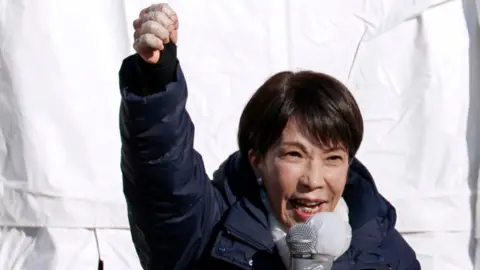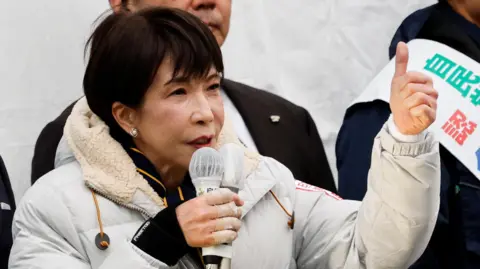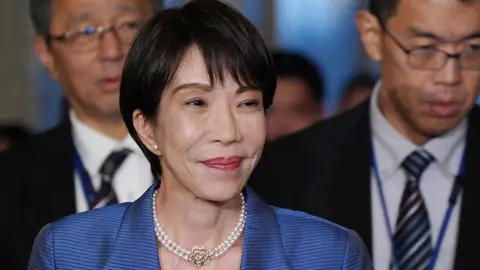
Japan's Prime Minister Sanae Takaichi is among some 60 female lawmakers petitioning for more women's toilets in the parliament building to match their growing representation in the legislature.
A record 73 women were elected into the 465-seat Lower House in October 2024, exceeding the previous high of 54 in 2009.
One opposition lawmaker, Yasuko Komiyama, reported that there are often long queues in front of the restroom before plenary sessions start and highlighted how one MP had given up going to the toilet before a session began.
Currently, there is only one female toilet with two cubicles near the plenary chamber, while the entire building houses nine female toilets with a total of 22 cubicles.
In contrast, there are 12 men's toilets equipped with 67 stalls and urinals, creating an evident disparity, especially for female parliamentary staff and visitors who also share the facilities.
Komiyama expressed the urgency for action, stating her desire to prepare for a future where women occupy more than 30% of parliamentary seats, calling for governmental support for this initiative.
Built in 1936, Japan's parliament building has seen no updates that acknowledge women’s restroom needs, with the first female MPs only being introduced in 1946, a year after women gained the right to vote.
The extensive building spans 13,356 square meters, yet the restroom facilities remain overwhelmingly inadequate for the current number of female lawmakers.
As women currently hold nearly 16% of the seats in the Lower House and about a third in the Upper House, Takaichi has advocated for improved female representation in her cabinet and aims to set standards akin to leading Nordic countries in female leadership.
This movement is part of a broader push in Japanese society to enhance women's rights and expectations, as queues outstretched in public women's restrooms highlight an ongoing national issue.