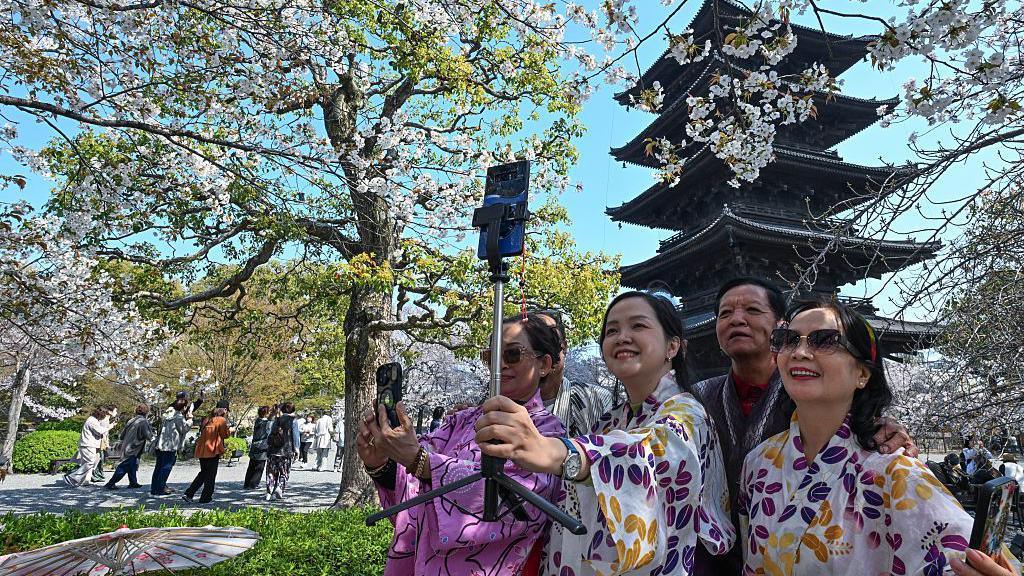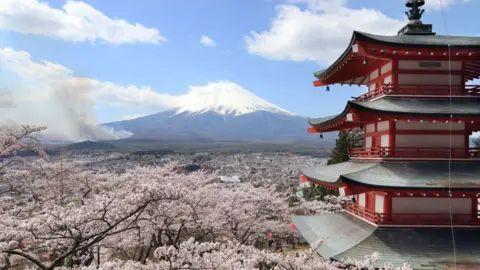
Japanese authorities in the town of Fujiyoshida, situated near the iconic Mount Fuji, have cancelled this year's cherry blossom festival, attributed to the unmanageable surge in tourist numbers that has frustrated local residents.
The influx of tourists has led to increased traffic congestion and littering, with alarming reports of tourists trespassing and defecating in private gardens. The festival typically attracts visitors during spring when Japan's famous cherry trees bloom alongside stunning views of Mount Fuji.
The picturesque scenery is threatening the quiet lives of our citizens, explained Mayor Shigeru Horiuchi, emphasizing the city's growing sense of crisis.
To safeguard the dignity and living conditions of residents, the city has decided to put an end to the festival, which has been a tradition for the past ten years. This decision reflects concerns over the habitat disruption caused by the rapid increase in tourists, which, according to the authorities, has dramatically exceeded the city's capacity.
In peak blossom season, the city experiences daily visitor numbers reaching 10,000, with this influx driven by factors such as a weak yen and viral social media promotion. Residents have reported distressing behavior among tourists that disrupts their daily lives, prompting officials to reconsider tourism management strategies.
While the cherry blossom festival will not proceed, the city is preparing for increased tourism in the upcoming months, hoping to manage visitor impact more effectively in the future.
This situation is not isolated; other tourist hotspots worldwide, such as Rome and Venice, are implementing similar measures to control visitor behaviors and protect local environments.