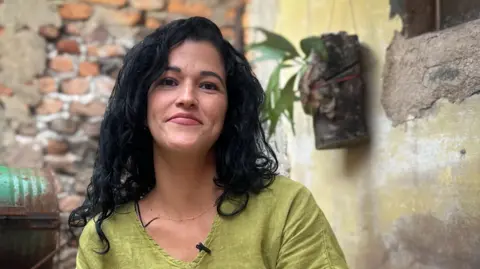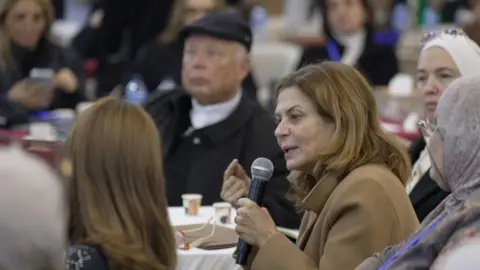
Hind Kabawat, Syria's minister for social affairs and labour, stands as the only female minister in a transitional government emerging from the ashes of prolonged conflict. On her first day in office, she questioned, 'Why are there no more women?'—a reflection that underscores her commitment to gender equity in a country still grappling with the aftermath of war.
Her position has not been without challenges. The transitional government faces accusations of sectarian violence and inadequate representation of women within its ranks. Kabawat, a former opposition leader in exile, acknowledges the government has made missteps since the end of the Assad regime in December 2024 but maintains that such mistakes are expected during transitions.
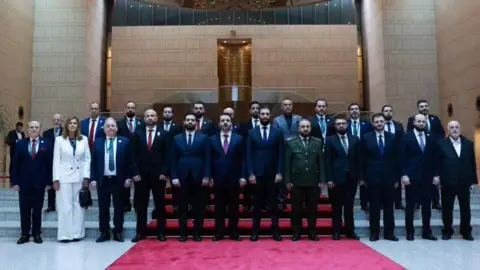
In the cabinet dominated by male figures, she has pressed President Ahmed al-Sharaa to appoint more women—a pledge he has assured her will be fulfilled. Kabawat emphasizes a hands-on approach in her ministry, focusing on pressing issues like job creation and housing for millions displaced during the civil war. Her commitment to her role is unwavering; she asserts, 'I am not here for window dressing.'
Kabawat aims to bridge societal divides and is actively involved in dialogues with various communities. Her efforts have included visiting displaced shelters, leading initiatives for the vulnerable, and encouraging more women to take part in leadership roles following decades of oppression.
Despite facing political and social hurdles, Kabawat's work highlights the shifting dynamics in Syria, as she inspires young women across the country to assert their rights and play a crucial role in shaping their future. 'You either occupy a space of decision-making power, or you don't want to be in that space at all,' she counsels.
With her resolute resilience and dedication to bringing structural change, Hind Kabawat embodies hope for a more inclusive and equitable Syria, as those within her community rally behind her vision for change.
Her position has not been without challenges. The transitional government faces accusations of sectarian violence and inadequate representation of women within its ranks. Kabawat, a former opposition leader in exile, acknowledges the government has made missteps since the end of the Assad regime in December 2024 but maintains that such mistakes are expected during transitions.
In the cabinet dominated by male figures, she has pressed President Ahmed al-Sharaa to appoint more women—a pledge he has assured her will be fulfilled. Kabawat emphasizes a hands-on approach in her ministry, focusing on pressing issues like job creation and housing for millions displaced during the civil war. Her commitment to her role is unwavering; she asserts, 'I am not here for window dressing.'
Kabawat aims to bridge societal divides and is actively involved in dialogues with various communities. Her efforts have included visiting displaced shelters, leading initiatives for the vulnerable, and encouraging more women to take part in leadership roles following decades of oppression.
Despite facing political and social hurdles, Kabawat's work highlights the shifting dynamics in Syria, as she inspires young women across the country to assert their rights and play a crucial role in shaping their future. 'You either occupy a space of decision-making power, or you don't want to be in that space at all,' she counsels.
With her resolute resilience and dedication to bringing structural change, Hind Kabawat embodies hope for a more inclusive and equitable Syria, as those within her community rally behind her vision for change.