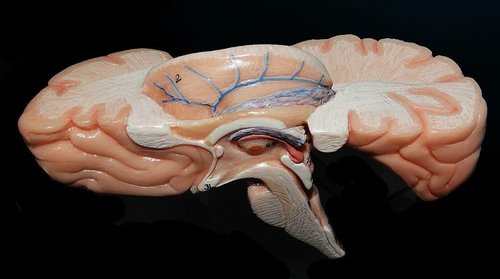
In brief
A groundbreaking study shows how advanced techniques allowed a team of over 100 scientists to record and analyze neural connections and activity in a fraction of the mouse brain, paving the way for future research on complete brain mapping.
In a stunning achievement for neuroscience, more than 100 scientists have successfully mapped the cellular activity and interconnections of neurons within just one cubic millimeter of a mouse's brain, an area containing an impressive 200,000 cells and 523 million connections. This monumental project has resulted in the compilation of 1.6 petabytes of data, roughly equivalent to 22 years of continuous high-definition video.The human brain is notoriously intricate, with even tiny samples housing a dense web of cells contributing to the complex dance of thought and behavior. As early as 1979, the eminent scientist Francis Crick noted the limitations of our understanding of brain structure at the microscopic level, pondering whether mapping such complexity was an impossible challenge. Fast forward to today, where this ambitious goal has been realized, illustrating just how far technology and research have come in recent decades.The study, published in the journal Nature, signifies a pivotal moment in neuroscience, with experts like Davi Bock from the University of Vermont emphasizing the potential that lies in these advancements. "Mapping a cubic millimeter is a milestone that opens the door to the broader aspiration of charting the entire mouse brain," he commented. Bock strongly believes undertaking such a comprehensive endeavor is entirely feasible and essential for future breakthroughs.The project's roots can be traced back to the work of Spanish neuroscientist Santiago Ramón y Cajal, who pioneered the study of individual neurons over 130 years ago. He observed and detailed the unique shapes of neurons and how they interact through axons and dendrites — the very building blocks that contribute to neural communication. This recent mapping effort sheds light on these interactions, revealing a deeper understanding of how inhibitory neurons like the Martinotti cell can modulate brain activity. Despite the state of knowledge in the field, questions regarding the derivation of human thought from such neural interactions persist. This study brings scientists one step closer to uncovering these mysteries and may ultimately enable us to map and comprehend the entire complexity of the mouse brain. As this research progresses, the implications for understanding not just mouse cognition but potentially human brain function could be revolutionary.