In brief
Indonesia’s northeast has seen its worst wildfire season in decades, with peat fires spewing choking haze across the region. BBC reporter Liza Tambunan reveals peat’s unique properties: thick, water‑logged mud that ignites deep underground and smolders for weeks, making containment impossible. The resulting smoke is rich in toxic pollutants that travel far, affecting air quality in Singapore and Malaysia. The fires also release massive amounts of carbon dioxide, accelerating climate change. The report highlights the urgency of better land management and emergency response to prevent future disasters.
Indonesia’s northeastern provinces are choked with a thick, yellow‑to‑brown haze that drifts across the archipelago. The culprit? Peat fires—buried, peat‑rich soils that ignite and burn underground, releasing a lethal cocktail of pollutants.
What is peat? Peat is a type of organic soil formed from partially decomposed plant material that has saturated for thousands of years. In Indonesia’s peatlands, this material is usually re‑wet by seasonal rains, keeping it relatively stable and harmless.
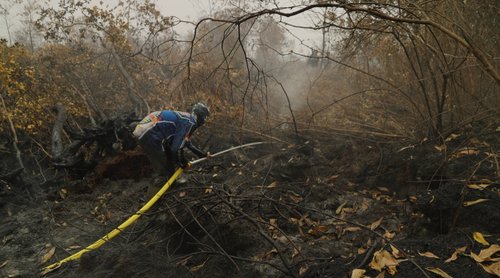
When the dry season brings intense heat and low humidity, the peat dries out. Once ashes reach the surface, fires can penetrate several meters below, and the fire is effectively smoldering. Because the burning peat is buried, it remains hidden from normal firefighting tactics; conventional methods cannot reach the charred layers, so fires can last for weeks.
The smoldering peat emits a haze that is heavy in fine particulate matter (PM2.5) and toxic gases such as carbon monoxide, nitrogen oxides, and volatile organic compounds. Respiratory and cardiovascular ailments spike in the affected populations, and there are reports of thousands of each suffering daily health complications.
The fire’s impact is not confined to Indonesia. Prevailing winds carry the haze northward, clouding the skies in Singapore, Malaysia, and the southern Philippines. Air‑quality monitors report some of the worst levels recorded in Southeast Asia.
The carbon released from peat fires is enormous. While peat stores carbon for millennia, once it burns, the stored carbon is unleashed into the atmosphere as CO₂. Scientists estimate that peat fires could produce up to 13% of Southeast Asia’s total greenhouse gas emissions.
Why containment is so hard: 1) The fire is underground, making it invisible to surface crews. 2) Watering the peat with large volumes of water is ineffective because it cannot penetrate deeply, and 3) The region’s forestry infrastructure is often underfunded, limiting response capabilities.
BBC’s Liza Tambunan is on the ground in central Kalimantan, interviewing local farmers, firefighters, and environmental scientists. Her report emphasizes the urgent need for improved land‑management policies, stricter enforcement of fire bans, and better public health messaging.
The peat–fire crisis in Indonesia is a stark reminder that climate change, industrial ambition, and inadequate regulation can converge to produce a public‑health nightmare that extends far beyond national borders.