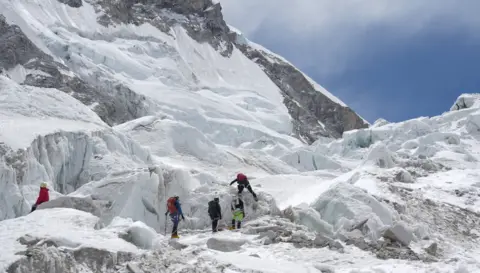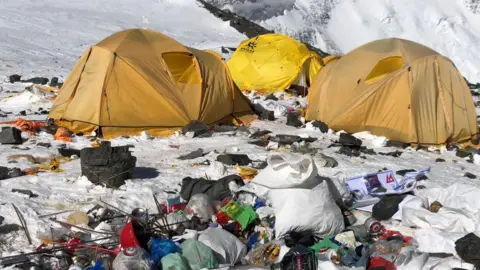
A scheme to encourage climbers to bring their waste down from Mount Everest is being scrapped - with Nepalese authorities telling the BBC it has been a failure.
Climbers had been required to pay a deposit of $4,000 (£2964), which they would only get back if they brought at least 8kg (18lbs) of waste back down with them. It was hoped it would begin to tackle the rubbish problem on the world's highest peak, which is estimated to be covered in some 50 tonnes of waste.
But after 11 years - and with the rubbish still piling up - the scheme is being shelved because it failed to show a tangible result.
Himal Gautam, director at the tourism department, told the BBC that not only had the garbage issue not gone away, but the deposit scheme itself had become an administrative burden.
Officials said the deposit money had mostly been refunded over the years - which should mean most climbers brought back their trash. However, it was noted that the rubbish climbers have brought back is usually from lower camps.
According to Tshering Sherpa, chief executive officer of the Sagarmatha Pollution Control Committee, climbers primarily return with oxygen bottles from higher camps, while items such as tents and food containers are largely left behind.
The authorities concluded that the rule allowing climbers to return with less trash than they produced was flawed, compounded by inadequate monitoring of climber activities.
Moving forward, authorities have proposed a non-refundable clean-up fee, likely set at $4,000 per climber, which will fund monitoring and clean-up efforts. This new approach aims to create a dedicated fund for managing waste on the mountain and is a response to calls from the Sherpa community for more effective waste management systems.
Despite ongoing concerns about the impact of increasing numbers of climbers, the Nepalese government is committed to finding solutions to maintain the natural environment of this iconic peak.