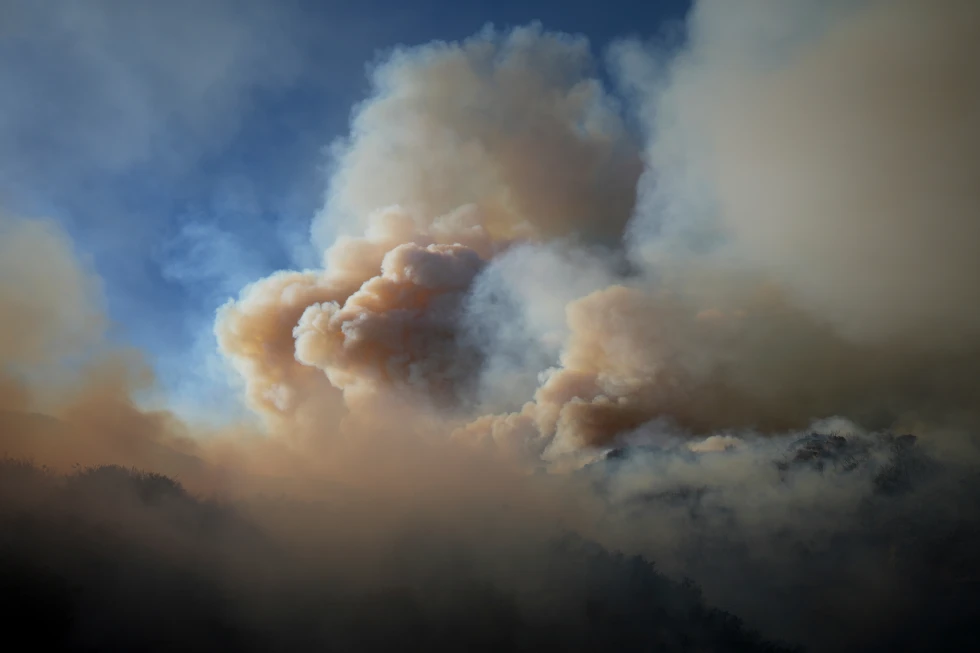
A new study published in Science Advances connects chronic exposure to pollution from wildfires to tens of thousands of deaths each year in the United States. Over the period from 2006 to 2020, long-term exposure to PM2.5 particles from wildfire smoke was linked to approximately 24,100 fatalities annually in the contiguous U.S.
Yaguang Wei, an assistant professor at the Icahn School of Medicine at Mount Sinai and a co-author of the study, stated, 'Wildfire smoke is very dangerous. It is an increasing threat to human health.' Experts in the field are not surprised by these findings and urge for further research to validate these results across different studies.
The research emphasizes the dangers of PM2.5 particles that penetrate deep into the lungs and bloodstream, exacerbating existing health conditions such as respiratory and cardiovascular diseases, and potentially leading to premature death.
Min Zhang, another co-author, highlighted that the surge in wildfire frequency and intensity, driven by climate change, exacerbates the risks associated with such pollutants. Further, factors like urban development in fire-prone regions elevate the risk, suggesting policy changes and environmental protections are urgently needed.
While the study benefitted from extensive data spanning over 3,000 counties and multiple causes of death, the researchers caution that variability in wildfire exposure could skew the measurements of its health impacts. Notably, the areas affected the worst were often rural and younger populations impacted most severely by exposure to PM2.5.
Despite the evident health risks posed by wildfire-derived pollution, existing regulations by the Environmental Protection Agency (EPA) around such emissions are still lacking, raising concerns among health experts about compliance and enforcement as environmental policies face rollback.
This comprehensive and alarming data underscores the critical nature of addressing wildfire pollution as an urgent public health crisis.