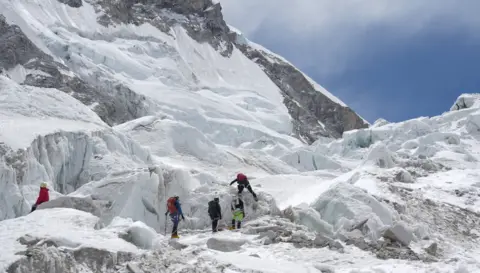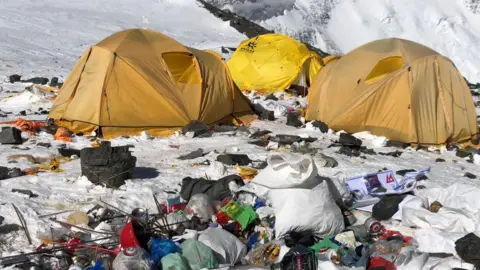
A scheme to encourage climbers to bring their waste down from Mount Everest is being scrapped - with Nepalese authorities telling the BBC it has been a failure.
Climbers had been required to pay a deposit of $4,000 (£2964), which they would only get back if they brought at least 8kg (18lbs) of waste back down with them.
It was hoped it would begin to tackle the rubbish problem on the world's highest peak, which is estimated to be covered in some 50 tonnes of waste.
But after 11 years - and with the rubbish still piling up - the scheme is being shelved because it failed to show a tangible result.
Himal Gautam, director at the tourism department, told the BBC that not only had the garbage issue not gone away, but the deposit scheme itself had become an administrative burden.
Officials noted that most of the deposit money had been refunded over the years, indicating that most climbers did bring back their trash, but the effort predominantly addressed waste from lower camps, while higher camps remain neglected.
From higher camps, people tend to bring back oxygen bottles only, said Tshering Sherpa, CEO of the Sagarmatha Pollution Control Committee. Other things like tents and cans and boxes of packed foods and drinks are mostly left behind there.
Nepalese authorities are now formulating a new scheme that includes a non-refundable clean-up fee which will be used to set up checkpoints and deploy mountain rangers to ensure compliance with the waste management rules.
Tourism ministry officials are proposing the fee to be around $4,000 per climber, similar to the former deposit amount, aimed at establishing a sustainable approach to tackling the waste issue on Everest.
The lack of effective monitoring has also been a significant challenge in ensuring climbers manage their waste responsibly. Moving forward, there are hopes that the new strategy will provide better oversight and effective clean-up operations.