
In brief
In northern Mozambique, severe flooding has forced communities to evacuate as aid teams from various countries bolster local efforts. Residents recount harrowing experiences as many have lost homes and livelihoods, with some still refusing to leave dangerous areas. As rescue operations continue, the situation remains dire with concerns about future infrastructural damage and food shortages.
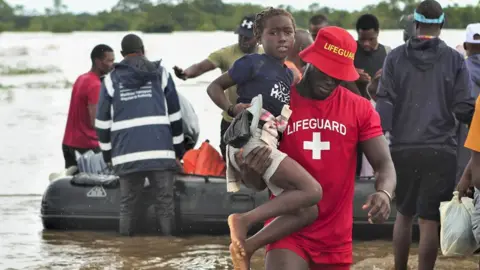
Tens of thousands of people in Mozambique are being rescued as rising waters continue to devastate the southern African nation - the worst flooding in a generation.
Teams from Brazil, South Africa, and the UK have been assisting with life-saving rescue operations. For me, this is the first time I have experienced a calamity of this magnitude. Elders say a similar disaster took place in the 1990s, recalls mechanic Tomaz Antonio Mlau.
Mlau and his family, living near Marracuene, awoke to find their house inundated after the Inkomati River burst its banks. They boarded a rescue boat and made their way to safety, leaving all their belongings behind.
Like Mlau, many were captured by flooding that rose to unprecedented levels, with some families resorting to clinging to treetops and rooftops in a desperate bid for safety. Francisco Fernando Chivindzi, a local farmer, expressed the loss of his livestock and crops due to the floods, sentiments mirrored by many farmers affected in the region.
As conditions remain precarious, authorities note that more than 10,000 people are affected in Marracuene alone, with 642,122 reported affected across the country. Mayor Shafee Sidat emphasizes the challenge of convincing some residents to evacuate from risk areas.
The looming concern is about heavy rains in neighboring South Africa that could exacerbate the situation and inundate more agricultural land. Currently, shelters like Gwazamutini Secondary School serve as temporary refuge, but food and resources are running low, complicating the already severe humanitarian crisis.
As the government deliberates on rescheduling the academic calendar, many families await the water's receding, filled with uncertainty about their homes and futures.
