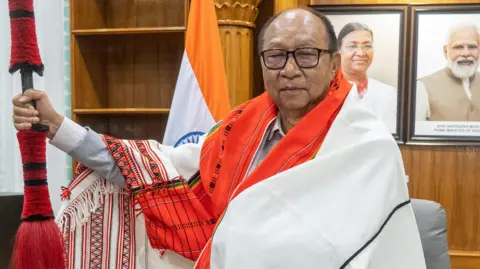
Manipur, located in India's northeast, has appointed a new chief minister after enduring a year of federal rule due to widespread ethnic violence, which resulted in the deaths of over 260 individuals. Yumnam Khemchand Singh, a fifth-dan black belt in taekwondo, took office amid deep societal rifts between the majority Meitei and minority Kuki-Zo communities that the violence exacerbated.
The violence, which began in 2023, forced communities into segregation, displacing thousands. Singh, previously involved in taekwondo instruction and with ties to the Bharatiya Janata Party, was elected for the first time in 2017 and has held various political roles, including state minister and assembly speaker. As he takes on the leadership of a troubled state, questions loom concerning his capacity to foster peace.
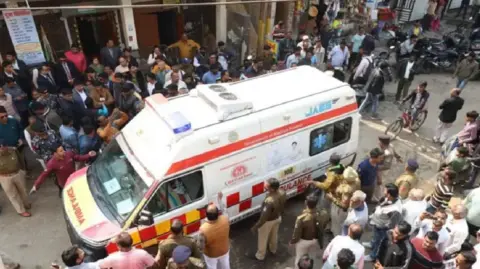
Reactions to Singh's appointment are mixed. While some express optimism about his ability to bridge divides, others remain doubtful, advocating for a genuine approach to conflict resolution. Singh's efforts appear to be critical in addressing the grave mistrust prevailing within communities. Following his oath on February 4, tensions have resurfaced, exemplified by protests in parts of Manipur and incidents of violence that showcase the fragility of the state's peace.
With a cabinet that includes ministers from both the Meitei and Kuki-Zo communities, Singh's administration seeks to reflect ethnic representation in a land fraught with division. Nonetheless, true peace requires more than participation; it demands trust, justice, and political integrity to address the historical grievances of all communities involved. With unrest marking years of Manipur's history, Singh's actions in the coming weeks will be vital in determining whether he can pave the path to healing or if the conflict will continue to fester.
The violence, which began in 2023, forced communities into segregation, displacing thousands. Singh, previously involved in taekwondo instruction and with ties to the Bharatiya Janata Party, was elected for the first time in 2017 and has held various political roles, including state minister and assembly speaker. As he takes on the leadership of a troubled state, questions loom concerning his capacity to foster peace.
Reactions to Singh's appointment are mixed. While some express optimism about his ability to bridge divides, others remain doubtful, advocating for a genuine approach to conflict resolution. Singh's efforts appear to be critical in addressing the grave mistrust prevailing within communities. Following his oath on February 4, tensions have resurfaced, exemplified by protests in parts of Manipur and incidents of violence that showcase the fragility of the state's peace.
With a cabinet that includes ministers from both the Meitei and Kuki-Zo communities, Singh's administration seeks to reflect ethnic representation in a land fraught with division. Nonetheless, true peace requires more than participation; it demands trust, justice, and political integrity to address the historical grievances of all communities involved. With unrest marking years of Manipur's history, Singh's actions in the coming weeks will be vital in determining whether he can pave the path to healing or if the conflict will continue to fester.