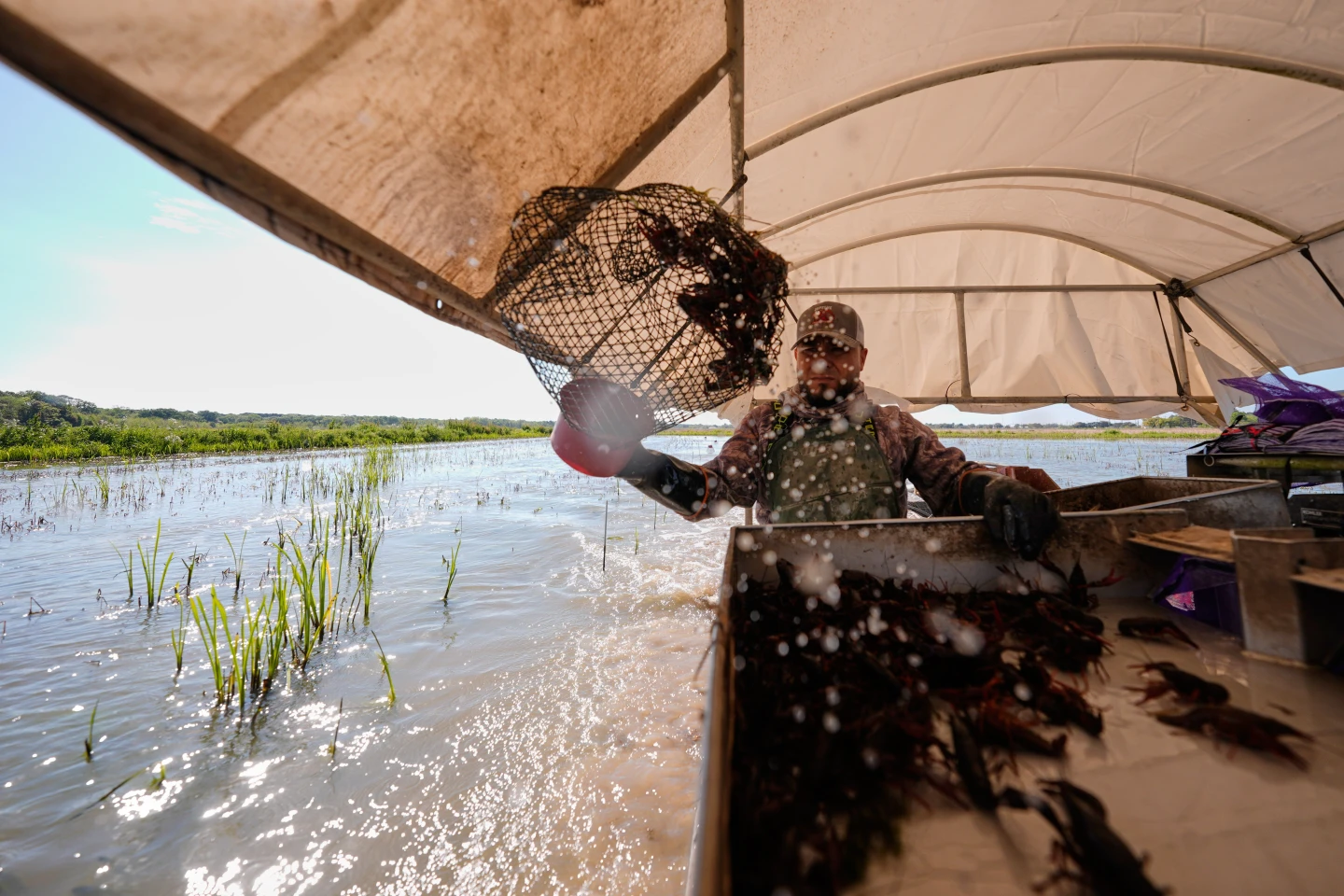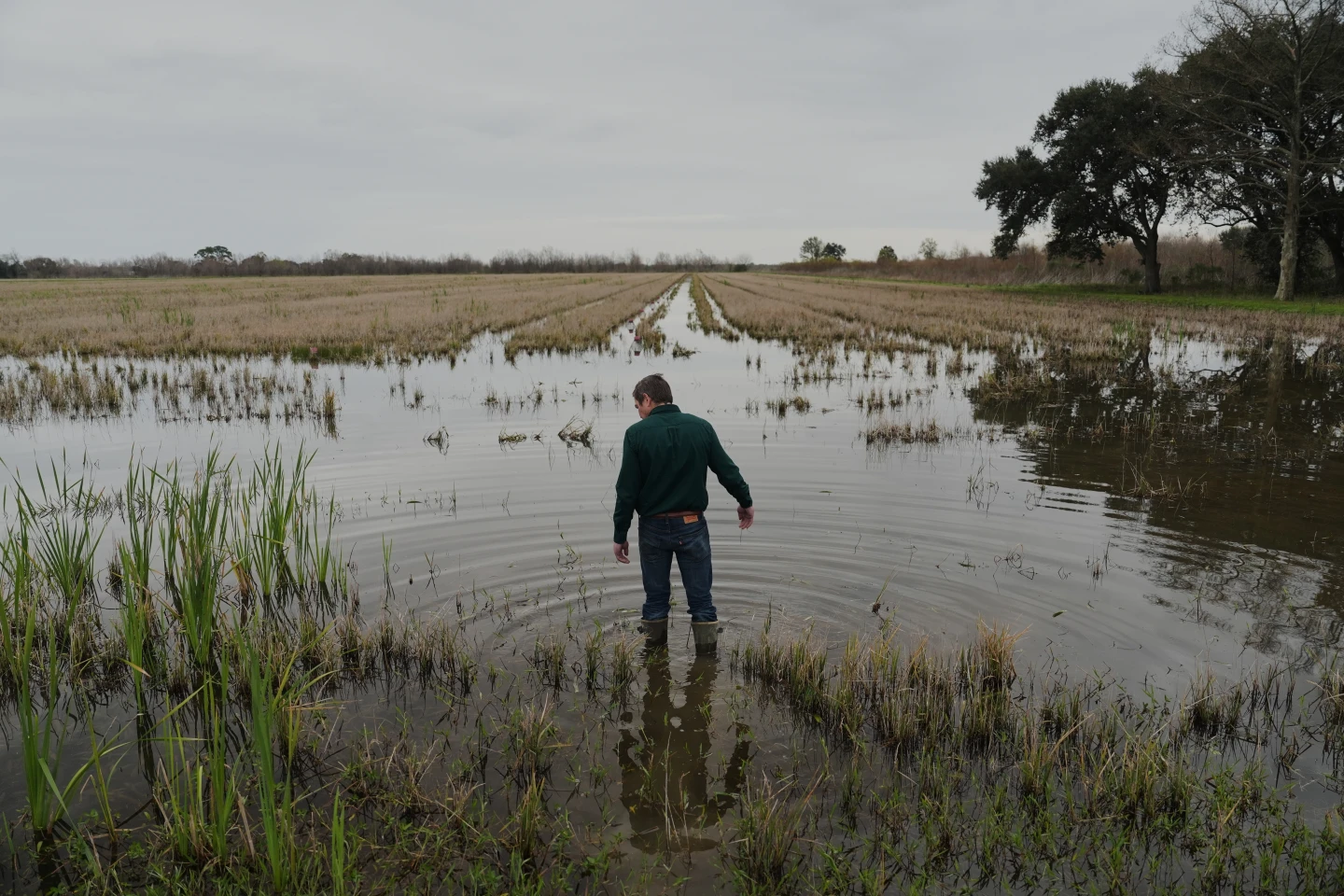
KAPLAN, La. (AP) — Josh Courville has harvested crawfish his whole life, but these days he’s discovering an unwelcome invader in his Louisiana fields.
Apple snails — roughly the size of baseballs when mature — have proliferated since a significant flood in 2016, with Courville noting that he catches several snails for every crawfish. These snails are tenacious, surviving harsh weather conditions and reproducing quickly, laying thousands of bubblegum-pink eggs monthly.
“It’s very disheartening,” Courville expressed. “The most discouraging part is not having much control over them.”
In Louisiana's agricultural context, where rice and crawfish often coexist, farmers now face another threat: tiny delphacid insects capable of devastating rice crops. Experts suspect that the growing prevalence of these pests may be linked to changing farming practices, global trade, and climate variations.
Both Courville and rice farmer Christian Richard reported that the snail infestation has previously destroyed significant areas of crops.
Despite attempts to manage these issues through sophisticated planting practices and cautious pesticide use, farmers remain under pressure to balance pest control while sustaining their livelihoods. This is compounded by the rising costs associated with pest management measures, such as deploying new pesticides like copper sulfate, which can run into the thousands for a single operation.
Experts stress the need for adaptive agricultural strategies responsive to the evolving climate landscape."