In brief
In the wake of a massive cost‑of‑living protest, Milan witnessed clashes that saw police deploy tear gas and water cannons. Over 200 people, mostly minors, were detained, with police and protestors suffering injuries. Prime Minister Giorgia Meloni called for an emergency security meeting and urged political opponents to condemn the violence. Similar unrest rippled to Turin and Bologna, while other European cities reported comparable riots. The incident shone a spotlight on Italy’s fragile social fabric as elections loom.
Italian Prime Minister Giorgia Meloni convened an emergency security meeting after a weekend of violent clashes in Milan that erupted amid protests over the rising cost of living.
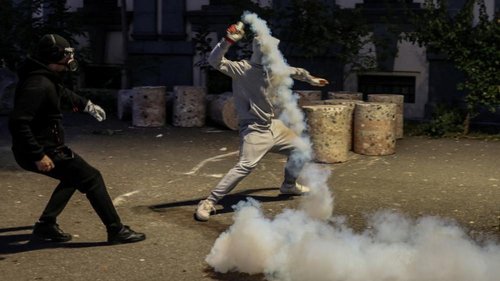
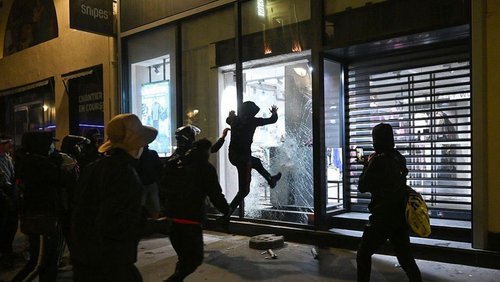
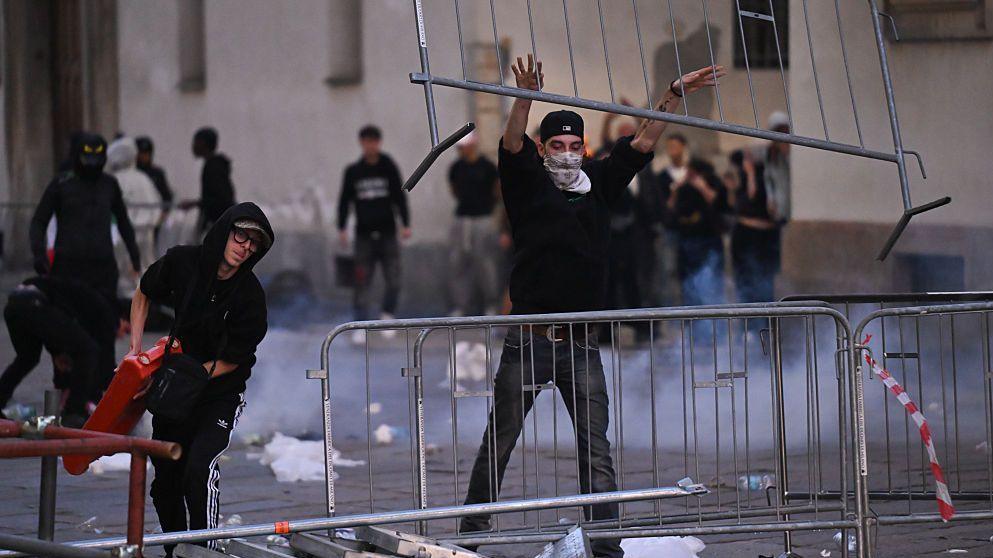
More than 5,000 people gathered outside the city centre, and police responded with tear gas, water cannons and forceful crowd control. The demonstrations quickly devolved into violence—throwing paving stones, bins and chairs at officers—resulting in injuries to both police and protestors.
On Sunday, Meloni warned that “hooligans” had taken advantage of the protests to spread chaos, declaring the destruction of public property a “new phenomenon” that mirrors unrest across Europe.
Over 200 detainees were taken into custody, 80% of whom were under 18, according to the national police agency. The prosecutor’s office is seeking prison sentences for five adults charged with looting, vandalism and resisting arrest.
The violence spilled over into other northern cities: in Turin a group of youths was detained while carrying cobblestones and window‑breaking hammers, and a metro station in Bologna was temporarily shut down for security reasons.
Meloni called on opposition parties to issue a unified condemnation of the violence, arguing that any ambiguity in their response would serve as a justification for further unrest. The Democratic Party’s leader, Elly Schlein, likewise denounced the rioting but emphasised the need to protect peaceful protesters struggling for a living wage.
The episode underscores the volatility surrounding Italy’s upcoming elections and confirms that the cost‑of‑living crisis remains a flashpoint for civil dissent across the continent.