In brief
In the wake of Saturday’s widespread rioting, French leaders have accused far‑left groups of orchestrating the violence, but evidence remains inconclusive. The 3,000-plus shops looted across the nation are viewed by critics as opportunistic acts, yet the organised attack on police vans raises suspicions of pre‑planned intent. While the National Assembly pushes for a parliamentary inquiry, social media and intelligence reports fuel a narrative of student protests manipulated for electoral gain. Citizens, meanwhile, call for clearer distinctions between peaceful demonstrators and violent rioters, as public disillusionment with the political establishment continues to rise.

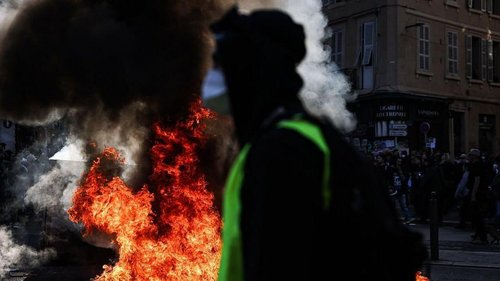
The violent eruptions that rattled Paris and other French cities over the weekend have splintered a nation already on the brink of a parliamentary election, with politicians from all sides racing to assign blame.
In a decisive televised address, Prime Minister Sébastien Lecornu declared that the so‑called "hard left" had "poured oil onto the fire", while Interior Minister Laurent Nuñez accused the "small far‑left and ultra‑left groups" of pre‑planning the mayhem. The prime minister’s insistence that these groups orchestrated attacks on police vans—captured on video by journalists—has not been corroborated by concrete forensic evidence.
Meanwhile, intelligence briefings released earlier in the month have linked some of the student protests to left‑wing organisations, noting a recurring black, circled letter "A" sprayed across multiple sites. Some media outlets have claimed that the student movement was being weaponised by the La France Insoumise party for a sweeping electoral strategy ahead of the 2027 presidential race, a claim the party has vehemently denied.
Galvanised by the surprise of thousands of shops looted overnight—over 3,000 businesses according to government statements—many young protestors took to social media to sell stolen goods. Platforms such as TikTok and Snap have been cited as amplifiers of the disorder, prompting calls for selective blackouts by former Prime Minister Gabriel Attal, who posits the radical left’s role in the chaos.
The fallout has stretched beyond borders. Belgian officials have warned that the "TikTokisation" of violence is spreading the contagion, while European youth across Italy, Portugal, and Albania have staged their own protests in response to soaring living costs and eroding public services. The wave of demonstrations has fed into a broader narrative of political instability, with a Pew Research Library poll reporting that 69% of French citizens feel dissatisfied with democracy.
As the election cycle heats up, presidential hopefuls are pressed to address the crisis. Marine Le Pen has seized on the chaos to elevate her hard‑line stance, accusing the Macron government of allowing the violence to fuel a narrative of dysfunction. President Macron, on the other hand, has demanded a full explanation from intelligence agencies and promised a renewed policing strategy in the aftermath.
At its core, the dispute over blame illustrates a deeper fracture: citizens desire a clear distinction between peaceful dissent and violent riot, while politicians exploit the moment to score political points. The coming weeks will determine whether France can reconcile these opposing narratives or if the discontent will fester into a larger fissure across the European continent.