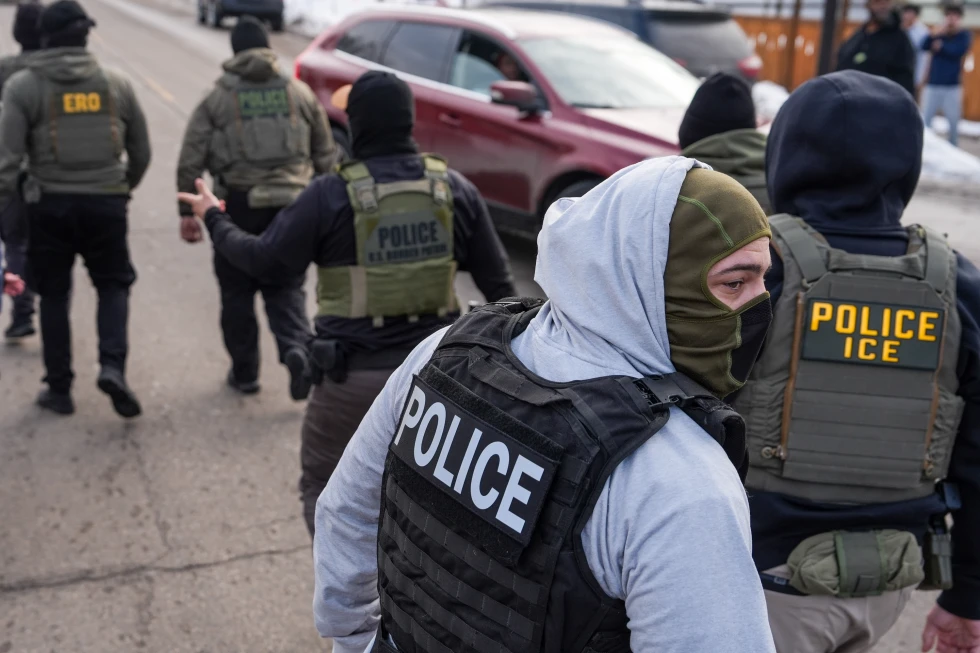
WASHINTON (Flux Daily) — The contentious issue of masked federal agents has become a focal point in the ongoing debate about immigration enforcement during the Trump administration. The visibility of officers engaged in immigration actions is drawing widespread scrutiny as communities seek accountability amidst heightened enforcement activities.
The Department of Homeland Security justifies the practice of masking agents as a protective measure against doxing and potential threats. However, experts argue that obscuring the identities of law enforcement officers can foster a climate of fear and mistrust within communities. This duality underlines a fundamental tension between ensuring safety for officers and maintaining the public's right to transparency from those who enforce the law.
In Congress, the question of whether to impose a ban on facial coverings for federal immigration officers has emerged as a significant issue as lawmakers debate funding for the Homeland Security Department ahead of an upcoming funding deadline.
“Community trust is built on transparency,” stated former Colorado sheriff Justin Smith, emphasizing the importance of recognizable officers in fostering healthy interactions between law enforcement and citizens. He added that “the ability to see an officer’s face is crucial for communication and personal safety.”
The Democratic party, including House Democratic Leader Hakeem Jeffries, is pushing for policies that would require federal agents to unmask themselves and wear body cameras during operations to increase accountability and oversight. “Cameras on, masks off” has become a rallying cry for those advocating greater transparency.
Despite these demands, many Republicans alert that revealing officer identities could lead to harassment against law enforcement family members, arguing in favor of governmental precautions for their protection.
Commentators note that no other policing agency employs masking as a standard operational practice; rather, masks are typically reserved for specific circumstances such as undercover operations or times of heightened risk. This raises concerns about the normalization of masked federal agents on city streets, reminiscent of historical instances of intimidation.
As the conversation surrounding immigration enforcement evolves, advocates continue to push for further reforms beyond just unmasking, seeking legislative restraints on the procedures that immigration officers can utilize while conducting operations in communities. The rising anxiety surrounding masked enforcement operations resonates deeply throughout many American communities, leaving discussions about safety and accountability at the forefront of national discourse.