In brief
In a bold move, ex‑President Joseph Kabila announced he will lead the Front for the Refoundation of the Nation (FRN), a coalition that vows to coordinate armed resistance against President Félix Tshisekedi’s administration. The coalition frames its struggle as a fight against “tyranny” and pledges to pursue its goal by all means, including force. The announcement follows Kabila’s 2025 death sentence in absentia for treason, a sentence he and his supporters have rejected. A press conference at his residence in Goma, a city already under M23 control, revealed Kabila signing the FRN charter, while the group installed Sultani Makenga, the M23 chief, as one of four deputies. With over a hundred militia groups active in eastern Congo and widespread international concern over Rwanda’s alleged support for rebels, the formation of the FRN marks a significant escalation that could further destabilise a nation already beleaguered by violence.
Former Democratic Republic of Congo president Joseph Kabila has been unveiled as the leader of a new rebel coalition, the Front for the Refoundation of the Nation (FRN), shedding fresh light on his return to active political life after being sentenced to death in absentia in 2025.
The FRN, according to the coalition’s statement, seeks to coordinate “resistance forces” to end the country’s “tyranny” and declares it will pursue its objective by all means, including force, signalling a willingness to engage in armed conflict against the current government headed by President Félix Tshisekedi.
The coalition’s founding press conference was held at Kabila’s residence in Goma, the eastern city that has been under the control of the M23 rebel group since last year. The event was covered by a short video in which Kabila signed the FRN charter alongside other senior leaders.
One of the appointed deputy commanders is Sultani Makenga, the chief of the M23, underscoring the close ties between the new coalition and the armed group that seized vast portions of mineral‑rich eastern Congo last year. The other deputies are also linked to the broader AFC‑M23 alliance that has been a central force in the region’s insurgency.
Kabila’s involvement came a year after he walked into the spotlight again, accusing President Tshisekedi’s administration of ignoring his proposals for ending the eastern conflict, undermining constitutional rule, mismanaging the economy, and failing to safeguard the security of the populace. He also alleged arbitrary arrests of political opponents and army personnel, positions that the government has yet to respond to publicly.
The former president, who ruled Congo between 2001 and 2019 before transferring power to Tshisekedi amid a disputed election, had remained largely out of the public eye following his self‑exile in 2023. He returned to Goma the previous year, signalling a shift back into the confrontation at the heart of the country’s ongoing crisis.
More than 100 armed militias now operate in eastern Congo, driven by an intricate mix of ethnic tensions, competition for control over lucrative natural resources, and a quest for political power. The United Nations and Western governments openly accuse Rwanda of backing the M23, a claim Rwanda denies, asserting that its military presence is defensive in response to threats from Congolese rebel forces.
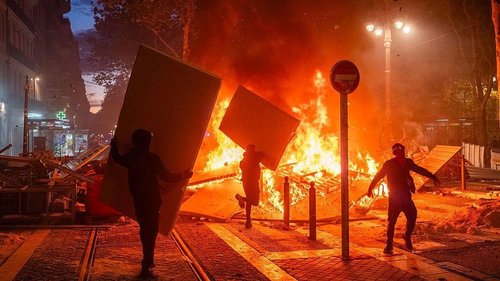
The emergence of the FRN amid these fraught conditions raises questions about the trajectory of Congo’s fragile peace. With Tshisekedi’s second term ending in 2028 and a controversial bill passed to potentially remove the constitution’s two‑term limit, the political landscape is already uncertain. In May, anger over the proposed constitutional changes sparked protests in Kinshasa that authorities clashed with, underscoring the high stakes of power shifts in a country that has endured two decades of violence.
Stakeholders across the region and beyond will be watching closely to see whether the FRN’s aggressive posturing translates into actionable military movements, and how the international community will respond to a renewed surge of insurgion that may once again destabilise the great African nation at the heart of the Rift Valley.