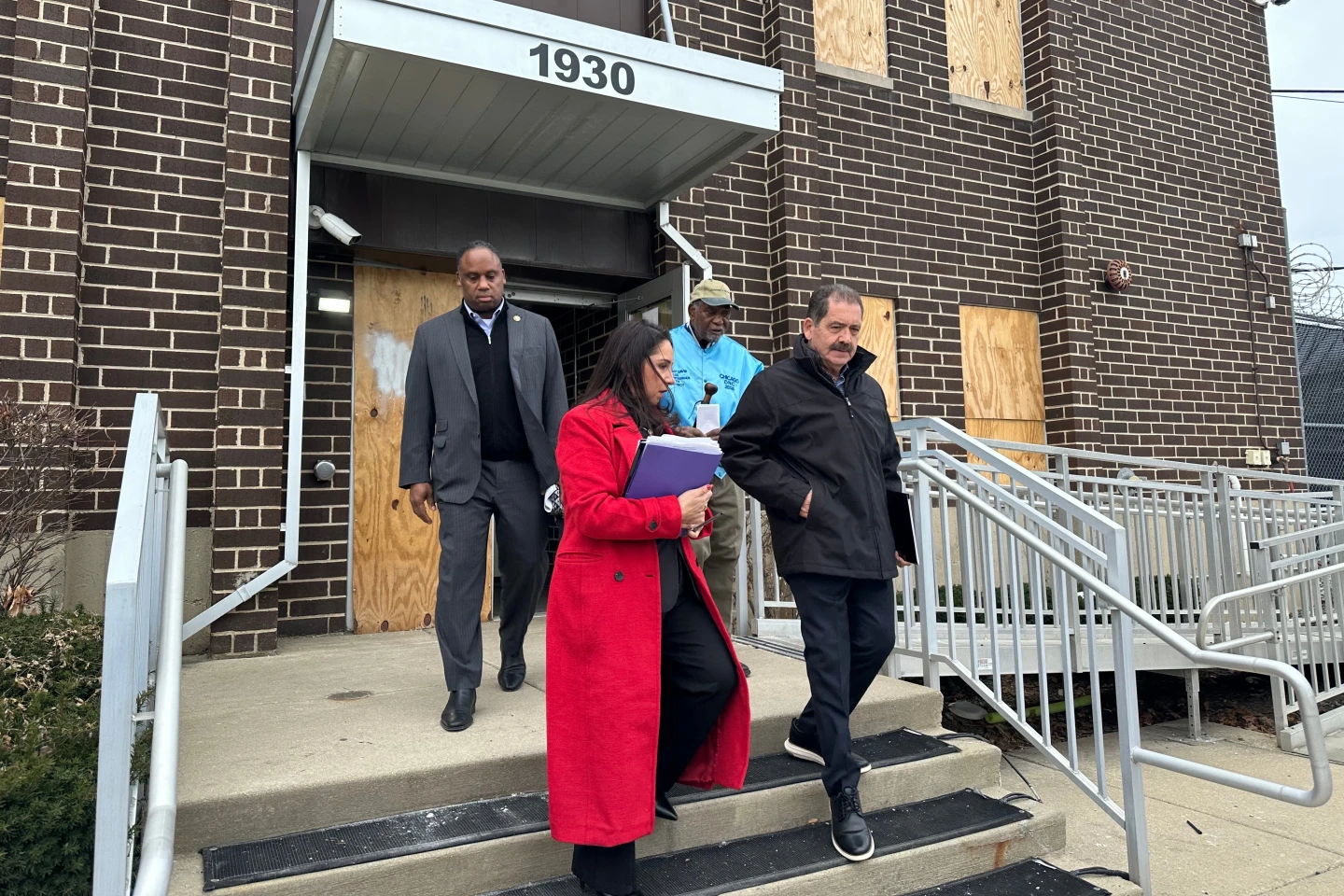
BROADVIEW, Ill. — In a significant step following recent legal changes, four Illinois Democrats toured a federal immigration processing center outside Chicago on Monday. This comes after a judge lifted previous restrictions on congressional visits to these facilities.
U.S. Representatives Danny Davis, Delia Ramirez, Jonathan Jackson, and Jesús “Chuy” Garcia entered the facility in Broadview, which has garnered criticism for its reportedly inhumane conditions during the crackdown on immigration in the Chicago area, leading to over 4,000 arrests.
Upon entering, the lawmakers engaged a masked official before spending an hour inside. Garcia spoke afterward about their intent to ensure compliance with a court order affirming their right to visit the center without prior notice.
The judge's ruling last week temporarily blocked the Trump administration's policy restricting congressional visits to immigration facilities, a decision stemming from a lawsuit filed by twelve congressional members.
During their visit, the lawmakers found an unusual situation, with only two individuals in custody compared to twenty on the previous day. Critics have noted that at the height of the crackdown, the facility housed over 150 detainees at times.
Congress members described the conditions in Broadview as concerning, despite some claimed improvements. They highlighted areas such as inadequate privacy in restroom facilities, limited access to showers, and the lack of medical personnel on-site.
Jackson remarked, “This visit will not end our responsibility. We will follow up.” Concerns were amplified by the recent death of a detainee in Michigan, which raised eyebrows regarding the health and safety of individuals processed at such centers.
The visit follows other recent tours by congressional members across the nation, as scrutiny of ICE's operations intensifies. In conjunction with the Illinois lawmakers, numerous reports are emerging about unsatisfactory living conditions for immigrants in detention facilities, with some being held without basic amenities.
Illinois' critical situation reflects broader struggles nationwide with the administration's immigration policies and their implications for human rights and individual welfare. As more representatives gain access to these facilities, the potential for policy changes looms as activists and lawmakers alike escalate their efforts to ensure humane treatment for detainees.