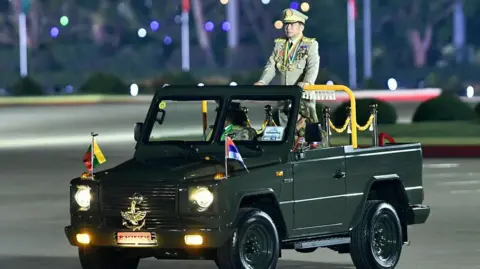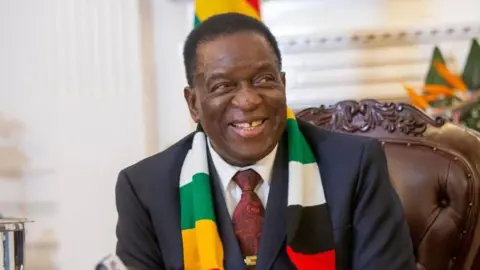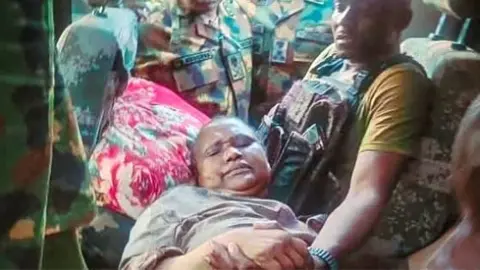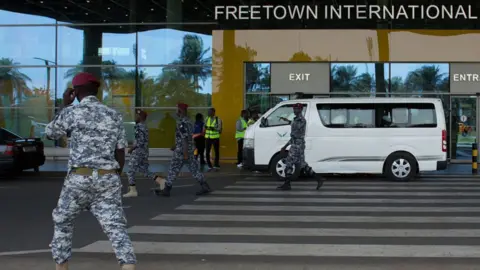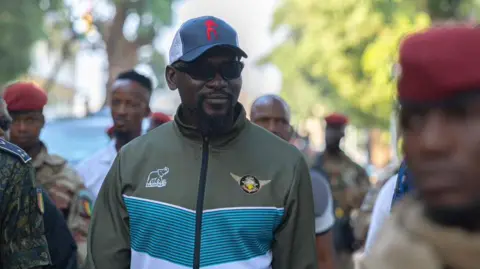
Since seizing power in September 2021, Mamadi Doumbouya has made a significant shift in his public persona, moving from military camouflage to civilian attire as he positions himself for a new role as Guinea's elected president. Initially known for his commanding presence, Doumbouya announced that the previous government had undermined democracy. Now, at 41, he prepares to be sworn in after winning December's election with 87% of the vote amidst accusations of electoral manipulation.
Critics, including ex-Prime Minister Cellou Dalein Diallo, describe the electoral process as a sham, highlighting the suppression of political dissent, the mysterious disappearances of activists, and the closure of media outlets. Though Doumbouya enjoys some popularity, questions regarding the legitimacy of his leadership linger.
His online presence presents a carefully crafted image of a hands-on leader, showcasing him engaging with citizens and working on community projects while sporting more casual attire. Analysts suggest this transformation may be a strategic move to connect with the public and distance himself from his military past.
Despite these appearances, many believe Doumbouya has yet to meaningfully transition away from his military roots. Reports of bans on political protests and the exclusion of opposition parties cast shadows over the democratic transition. Moreover, the plight of missing activists raises alarms from human rights organizations.
As Doumbouya looks to govern amid Guinea's wealth of natural resources, his emphasis on sovereignty resonates with a population enduring high poverty levels. The government aims to leverage the vast iron-ore resources in Simandou to improve infrastructure and livelihoods, though the success of this strategy remains to be seen as challenges persist.