In brief
Larry Fink, CEO of BlackRock, warns that if oil prices soar to $150 per barrel, a global recession could be imminent. His concerns stem from ongoing geopolitical tensions, notably in Iran, which could drive oil prices even higher. In a recent interview, Fink discussed the potential economic ramifications and stressed the importance of diversifying energy sources, urging nations to leverage available resources while transitioning towards alternative energy.
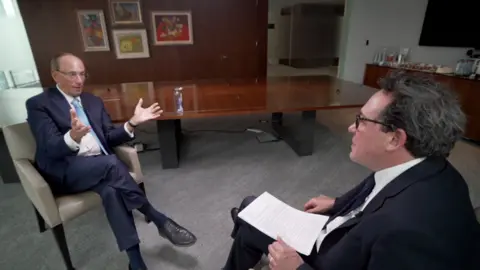
If the price of oil hits $150 a barrel it will trigger a global recession, the boss of US financial giant BlackRock has told the BBC.
Larry Fink, who leads the world's largest asset manager, stated that if Iran 'remains a threat' and oil prices stay high, it will have 'profound implications' for the world economy.
In an exclusive interview, he denied the existence of an AI bubble; however, he noted that technological advances meant many were pursuing university degrees at the expense of technical training.
BlackRock manages assets worth $14 trillion, giving Fink unique insight into the health of the global economy.
The ongoing conflict in the Middle East has seen volatile moves in financial markets as investors attempt to gauge the future of energy prices.
Fink explained that in one potential scenario where the conflict is resolved and Iran re-engages with the global community, oil prices could revert to pre-war levels. Conversely, ongoing instability could lead to prolonged periods of high oil prices, exacerbating global economic conditions and potentially resulting in a severe recession.
He pointed out that the sharp increase in energy costs has led to calls in the UK for greater domestic oil and gas production to counteract reliance on imports during unstable times. According to Fink, ensuring a balanced energy mix is crucial to stabilizing growth and improving living standards.
Moreover, he asserted that rising energy prices act as a regressive tax, disproportionately impacting lower-income individuals compared to wealthier populations.
Fink highlighted the need for countries to utilize current resources while also making aggressive moves towards alternative energy, especially if oil prices remain high for an extended period, which could vastly accelerate the shift towards solar and wind energy sources.
Addressing concerns of market instability reminiscent of the 2007-08 financial crisis, Fink expressed confidence that the financial institutions today are more robust and that the current market issues do not present a similar risk.
Regarding the AI boom, Fink emphasized that while it may create challenges for certain job sectors, it also promises significant employment opportunities in fields like plumbing and electrical work, advocating for a reassessment of education pathways to align with labor market needs.
His perspectives underscored the necessity for a balanced approach to workforce development that acknowledges both manual trades and technical training's value.