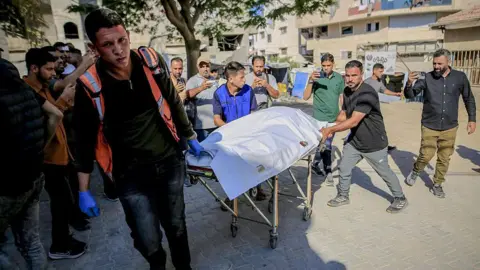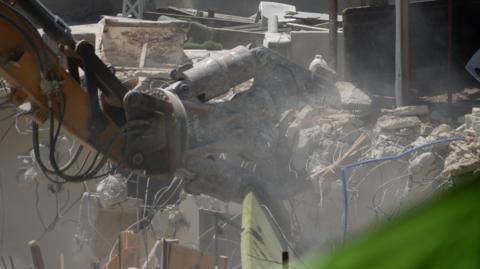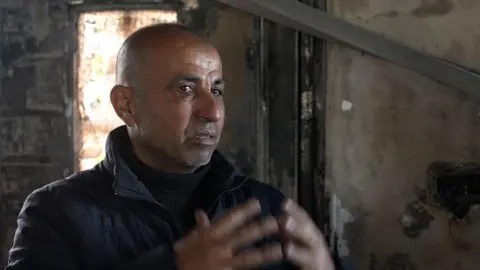
In the wake of horrifying attacks on Palestinian homes, Deir al-Hatab has become a focal point for increasing violence from Israeli settlers. Barhan Omar, who witnessed an assault on his family's villa, warns that the intention was not just to destroy property but to cause loss of life. He described the experience as 'organized terrorism,' reflecting a sentiment echoed among his neighbors who now fear for their safety and future.
As tensions escalate, the local community reports at least ten injuries during a recent rampage. Unprecedented in its scale for Deir al-Hatab, this violence is juxtaposed against the backdrop of broader regional unrest tied to ongoing conflicts. Following the funeral of an Israeli youth who died under controversial circumstances, hundreds of mourners, including politicians, converged to express their outrage, resulting in retaliatory actions against Palestinian enclaves.
The impact of settler violence is palpably felt across the West Bank, with recent data from the UN indicating a distressing trend. From January 2023 to mid-February 2026, over 4,765 Palestinians were displaced due to settler hostilities, particularly affecting vulnerable communities such as the Bedouin in Area C.
This alarming trend has not gone unnoticed, as Israeli governmental figures call for policies that further assert their claim over disputed territories. Activists and Palestinian leaders warn that such policies could ignite a new wave of resistance, as the cycle of violence appears far from an end.
In a somber reflection, residents of Deir al-Hatab express the tragic normalization of fear, with Samer Omar poignantly commenting on the need to heighten their defenses, yet questioning the efficacy of such measures. Neighbors brace for potential future attacks, ushering in an atmosphere fraught with anxiety and longing for justice and security as they navigate their fraught existence in a precarious geopolitical landscape.
As tensions escalate, the local community reports at least ten injuries during a recent rampage. Unprecedented in its scale for Deir al-Hatab, this violence is juxtaposed against the backdrop of broader regional unrest tied to ongoing conflicts. Following the funeral of an Israeli youth who died under controversial circumstances, hundreds of mourners, including politicians, converged to express their outrage, resulting in retaliatory actions against Palestinian enclaves.
The impact of settler violence is palpably felt across the West Bank, with recent data from the UN indicating a distressing trend. From January 2023 to mid-February 2026, over 4,765 Palestinians were displaced due to settler hostilities, particularly affecting vulnerable communities such as the Bedouin in Area C.
This alarming trend has not gone unnoticed, as Israeli governmental figures call for policies that further assert their claim over disputed territories. Activists and Palestinian leaders warn that such policies could ignite a new wave of resistance, as the cycle of violence appears far from an end.
In a somber reflection, residents of Deir al-Hatab express the tragic normalization of fear, with Samer Omar poignantly commenting on the need to heighten their defenses, yet questioning the efficacy of such measures. Neighbors brace for potential future attacks, ushering in an atmosphere fraught with anxiety and longing for justice and security as they navigate their fraught existence in a precarious geopolitical landscape.