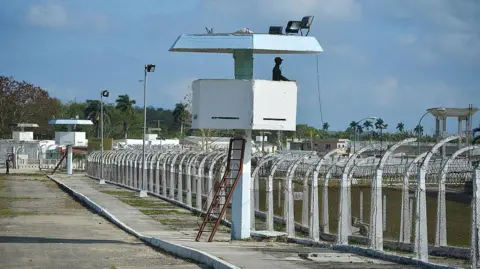
Cuba will free 2,010 prisoners as a humanitarian and sovereign gesture, its government has announced, amid ongoing political pressure from the US. The release will include foreign nationals, young people, women, and those aged over 60, according to a statement from the Cuban embassy in the US. The announcement comes in the context of the religious celebrations of Holy Week, which is a customary practice in Cuba's criminal justice system.
Since his return to the White House, President Trump has expressed a strong desire to alter Cuba's Communist leadership, implementing strict measures that include blocking oil shipments to the island, an action that has exacerbated fuel shortages and caused widespread blackouts.
Recently, a Russian-owned tanker carrying an estimated 730,000 barrels of crude oil became the first to dock at a Cuban port since January—a move Trump indicated he had no problem with. Cuba is known to hold hundreds of political prisoners, with critics of the government routinely facing harassment and prosecution.
The eligibility for release was based on a careful assessment of offences, good conduct while imprisoned, time served, and health status. This marks the second release announcement this year, following the release of 51 prisoners in March after dialogue with the Vatican. In 2025, Cuba had previously released 553 individuals as part of an agreement involving the Vatican and the US.
The political landscape has further complicated as Trump's shift in rhetoric towards Cuba has followed the US's actions against Venezuela's former President, Nicolás Maduro, amidst other regional political tensions. Venezuelan interim governance has also released political prisoners, responding to US demands, although reports indicate they have released only a fraction of those initially promised.
Cuba's current economic issues, heightened by the suspension of oil supplies from Venezuela, alongside Trump's aggressive policy toward the region, have led to severe energy crises on the island. The World Health Organization recently warned that ongoing fuel shortages have severely impacted Cuba's healthcare services.
As political negotiations progress, the Cuban government led by President Miguel Díaz-Canel continues to navigate complex relations with the Trump administration, where both sides have articulated numerous red lines, making consensus challenging.
Since his return to the White House, President Trump has expressed a strong desire to alter Cuba's Communist leadership, implementing strict measures that include blocking oil shipments to the island, an action that has exacerbated fuel shortages and caused widespread blackouts.
Recently, a Russian-owned tanker carrying an estimated 730,000 barrels of crude oil became the first to dock at a Cuban port since January—a move Trump indicated he had no problem with. Cuba is known to hold hundreds of political prisoners, with critics of the government routinely facing harassment and prosecution.
The eligibility for release was based on a careful assessment of offences, good conduct while imprisoned, time served, and health status. This marks the second release announcement this year, following the release of 51 prisoners in March after dialogue with the Vatican. In 2025, Cuba had previously released 553 individuals as part of an agreement involving the Vatican and the US.
The political landscape has further complicated as Trump's shift in rhetoric towards Cuba has followed the US's actions against Venezuela's former President, Nicolás Maduro, amidst other regional political tensions. Venezuelan interim governance has also released political prisoners, responding to US demands, although reports indicate they have released only a fraction of those initially promised.
Cuba's current economic issues, heightened by the suspension of oil supplies from Venezuela, alongside Trump's aggressive policy toward the region, have led to severe energy crises on the island. The World Health Organization recently warned that ongoing fuel shortages have severely impacted Cuba's healthcare services.
As political negotiations progress, the Cuban government led by President Miguel Díaz-Canel continues to navigate complex relations with the Trump administration, where both sides have articulated numerous red lines, making consensus challenging.