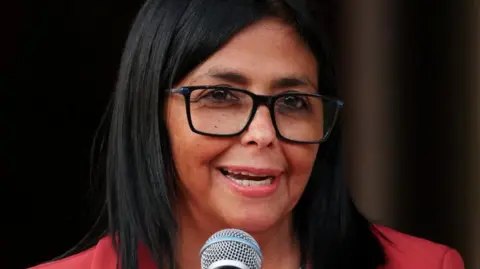
The United States has lifted sanctions on Venezuela's interim president, Delcy Rodríguez, a move marking a significant diplomatic shift less than three months after US forces captured her predecessor, Nicolás Maduro, during a military operation in Caracas.
Rodríguez, who was previously sanctioned in 2018 due to accusations of undermining democracy, was appointed interim president of Venezuela's National Assembly, which is largely populated by Maduro loyalists, shortly after the raid. US President Donald Trump has expressed support for her role, recently praising her capabilities.
Reacting to the sanctions being lifted, Rodríguez described it as a significant step in the right direction to normalise and strengthen relations between our countries through a post on social media platform X.
The sanctions removal allows Rodríguez greater access to financial resources and the opportunity to engage more freely with US investors and entities. White House spokesperson Anna Kelly highlighted this decision as a reflection of the progress made in promoting stability and economic recovery in Venezuela.
However, the opposition in Caracas is voicing concerns about the lifting of sanctions, urging the US to exert pressure on Rodríguez for the release of political prisoners—a significant demand from US Secretary of State Marco Rubio following Maduro's removal. While some detainees have been freed, rights groups indicate around 500 political prisoners remain incarcerated.
This development is seen as part of a broader pattern of warming relations between the US and Rodriguez’s administration. Earlier, the US reopened its embassy in Caracas, and a Venezuelan diplomatic team has been sent to restore its embassy in Washington.
Despite these diplomatic strides, critics underscore that there has been little discourse regarding the timelines for democratic elections. Rubio reiterated that free elections are critical to Venezuela's political future, emphasizing patience as they navigate the recovery phase of its political structure.
As relations evolve, the implications of Rodríguez's leadership and the US’s diplomatic strategies will continue to unfold, particularly as Venezuelan citizens seek hope and reforms amidst the lingering shadows of political turmoil.