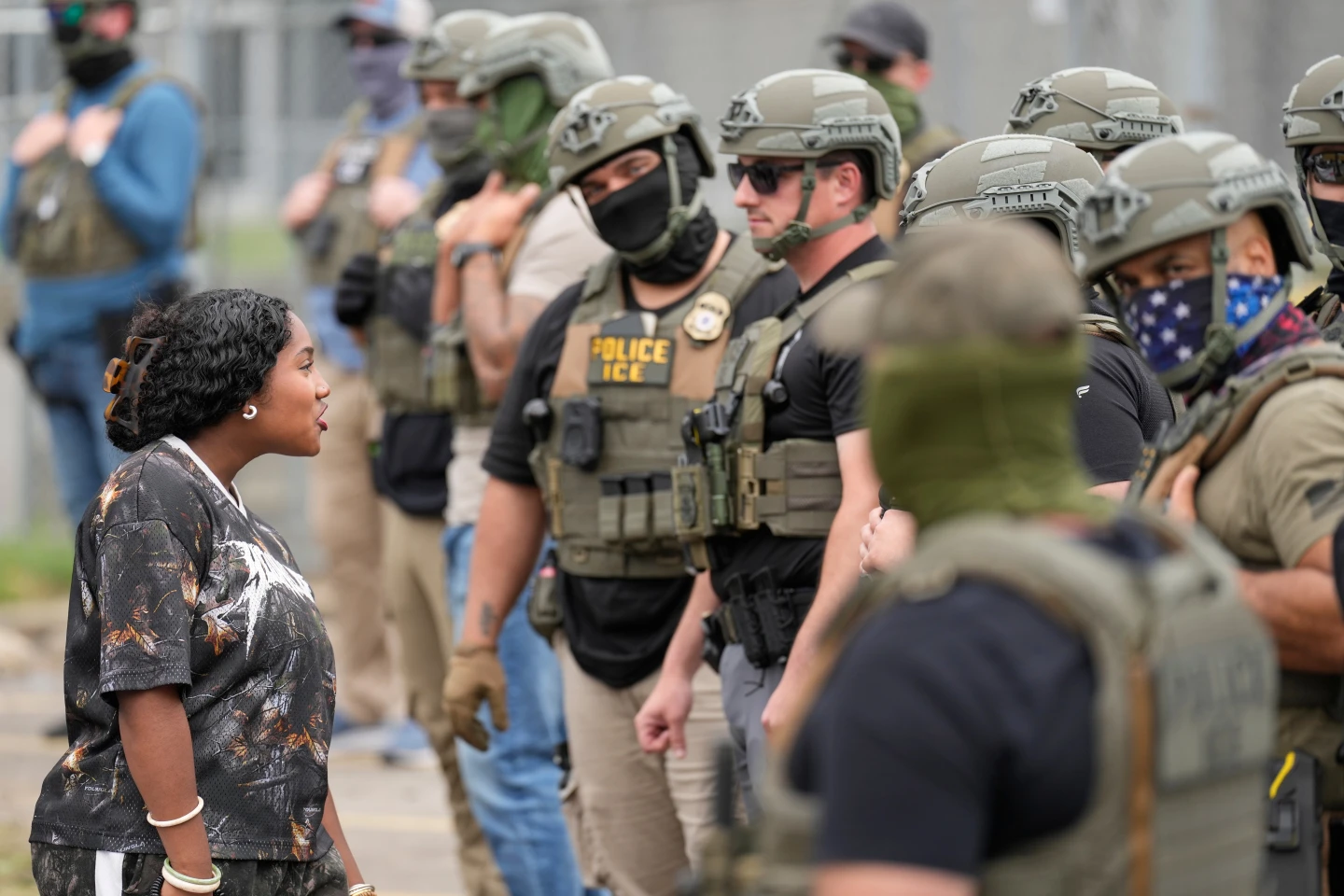
US Immigration and Customs Enforcement (ICE) officers detained a five-year-old boy on Tuesday during an immigration enforcement operation, Minnesota school officials and the family's lawyer have said.
Pre-schooler Liam Ramos was with his father - named by the Department of Homeland Security (DHS) as Adrian Alexander Conejo Arias - when Conejo Arias was approached by agents on his driveway.
In a statement posted on X, the DHS said ICE did NOT target a child, but was conducting an operation against his father, an illegal alien who abandoned his son when approached.
Zena Stenvik, the Columbia Heights Public Schools superintendent, asked: Why detain a five-year-old? You can't tell me that this child is going to be classified as a violent criminal.
In a post on X, ICE denied the child had been detained, stating: A criminal illegal alien ABANDONED his child as he fled from ICE officers, and our officers ensured the child was kept SAFE in the bitter cold. They claimed attempts were made to bring the family inside for custody transfer, but the father refused.
Photos provided by the school district depicted Liam in a bunny-shaped winter hat, standing outside with an officer holding his backpack.
Marc Prokosch, the family's attorney, confirmed they are currently detained in San Antonio, Texas, having entered the US from Ecuador in 2024 seeking asylum. Prokosch emphasized that the family complied with all protocols, debunking claims they were eluding authorities.
School officials noted another adult in the home attempted to take Liam inside but was declined by ICE agents.
US Vice-President JD Vance defended ICE's actions, suggesting they had no choice as the father fled, raising the question of responsibility for the child's safety.
The incident has intensified community concerns regarding recent ICE operations, with school officials reporting a pattern of detentions affecting local students.
DHS asserts that their operations target serious threats to community safety, while local protests reflect a growing discontent with enforcement practices. This situation comes amidst broader tensions over immigration policy and the treatment of families.