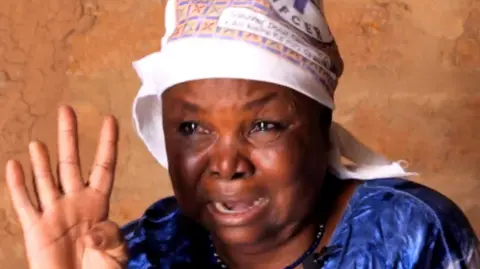
Late one night last month Iang Za Kim heard explosions in a neighbouring village, then fighter jets flying overhead. She ran out of her home to see smoke rising from a distance.
We were terrified. We thought the junta's planes would bomb us too. So we grabbed what we could – some food and clothes and ran into the jungles surrounding our village.
Iang's face quivers as she recounts the story of what happened on 26 November in K-Haimual, her village in Myanmar's western Chin State, and then she breaks down.
She's among thousands of civilians who've fled their homes in recent weeks after the Burmese military launched a fierce campaign of air strikes and a ground offensive in rebel-held areas across the country, to recapture territory ahead of elections starting on 28 December.
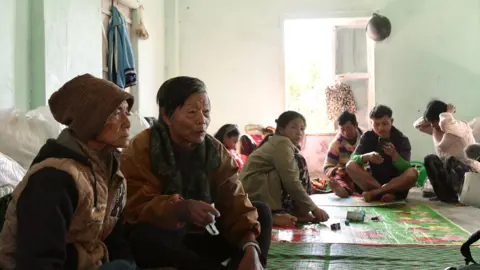
Four other women sitting around her on straw mats also start crying. The trauma of what they've gone through to make it to safety is clearly visible.
While the air strikes were the immediate cause for Iang to flee, she also doesn't want to be forced to participate in the election.
If we are caught and refuse to vote, they will put us in jail and torture us. We've run away so that we don't have to vote, she says.
Some from Chin state have described the junta's latest offensive as the fiercest it has launched in more than three years.
Many of the displaced have sought refuge in other parts of the state. Iang is among a group that crossed the border into India's Mizoram state. Currently sheltered in a rundown badminton court in Vaphai village, the group's few belongings they were able to carry are packed in plastic sacks.
Indian villagers have given them food and basic supplies.
Ral Uk Thang has had to flee his home at the age of 80, living in makeshift shelters in jungles for days, before finally making it to safety.
We're afraid of our own government. They are extremely cruel. Their military has come into our and other villages in the past, they've arrested people, tortured them, and burned down homes, he says.
The military government does not allow free access in the country for foreign journalists. It took control after a coup in February 2021, launching indiscriminate attacks against civilians.
During its latest offensive, the junta targeted a hospital in Rakhine State, resulting in casualties among the civilian population. The Chin Human Rights Organisation has reported multiple civilian deaths and retaliatory measures targeting schools and places of worship.
The National League for Democracy party, once led by Aung San Suu Kyi, will not be contesting the election, further delegitimizing the process in the eyes of many civilians.
Iang and others believe that the military's claims of conducting free and fair elections are unfounded, seeing their situation as a clear violation of democratic principles. As rebel groups position themselves for defense amid the military's relentless advance, the prospects of peace and return to democracy seem increasingly remote.