In brief
Austrian schools have begun enforcing a law that bans hijabs and burkas for girls under 14, a move justified by officials as a step toward gender equality. Critics claim the ban violates religious freedom and could be unconstitutional, citing a 2020 court ruling that earlier headscarf bans were invalid. The new regulation will require teachers to confront violations, potentially involving child‑service intervention and fines for guardians. The policy has sparked student protests and diverging political responses, from calls for further restrictions by the Freedom Party to memoranda from the Islamic community planning legal battles.
New headscarf ban takes effect in Austrian schools
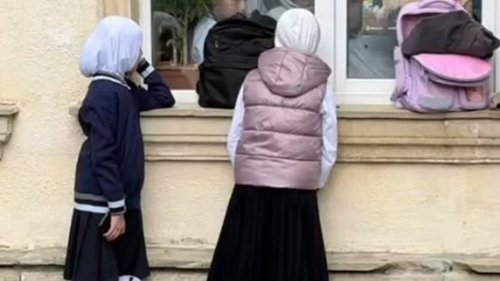
Austria’s fresh school‑year policy has lifted restrictions on Muslim girls under 14 wearing hijabs or burkas in both public and private schools. The decision follows a coalition of the conservative ÖVP, the Social Democrats and the liberal NEOS, who say the ban protects young girls and promotes gender equality.
Government and opposition response
Integration Minister Claudia Bauer described the headscarf a symbol of “oppression” and a tool for controlling girls from a very early age. The Education Minister, Christoph Wiederkehr, is expected to enforce the new law, with teachers required to hold talks with students and parents and, if necessary, to involve child‑services and impose fines of up to €800 for repeated violations.
The Green Party has criticized the oversight role placed on teachers, while the far‑right Freedom Party insists the ban is not restrictive enough and demands broader prohibition of any head coverings. Party leader Ricarda Berger adds that “there is no place for political Islam in our schools.”
Islamic community and legal challenges
The Official Islamic Community in Austria (IGGÖ) has denounced the measure, labeling it a disproportionate infringement on religious freedom. Representative Carla Amina Baghajati says the community will support families who wish to challenge the law before the Constitutional Court, echoing a 2020 ruling that a prior ban was unconstitutional for breaching Austria’s neutral‑religion principle.
Students and civil‑society groups have already staged protests, demanding that individual choice, not policy, should determine headscarf usage. A 11‑year‑old protester displayed a banner reading “my headscarf, my decision” during a recent demonstration in Vienna.
European context
The debate mirrors France’s longstanding ban on conspicuous religious symbols in schools, though Austria’s law uniquely targets Muslim head coverings. Other European countries—France, Belgium, Denmark—also prohibit full face veils in public settings.
Later developments will hinge on court rulings, teacher enforcement, and student activism shaping the future of religious expression within Austria’s public schools.