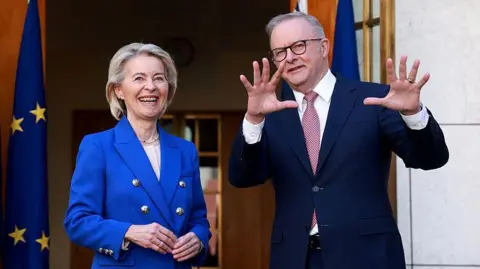
Australia and the European Union have agreed a sweeping free trade deal after eight years of negotiations. The deal signed in Canberra is worth about A$10bn ($7bn; £5.2bn) and was described as a mutual 'win-win' by Australia's prime minister and the visiting European Commission President Ursula von der Leyen.
She described the deal as having a focus on 'collective resilience' in a world that is 'deeply changing'. As well as removing almost all tariffs on trade, the two sides agreed to increase cooperation on defence and critical minerals.
European carmakers welcomed the deal, but farmers in both Europe and Australia were unhappy at export quotas agreed for Australian beef and lamb. The amount of Australian beef allowed into the EU is set to increase more than tenfold in the next decade, but Australian farmers had wanted more, while European farmers were opposed to increases.
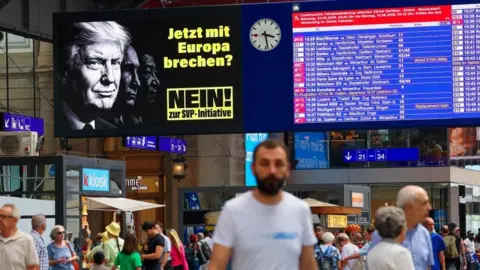
Tuesday's accord in Canberra is the latest trade deal struck by Brussels as it tries to diversify its global trading relationships, given the fast changing geopolitical landscape and unpredictability of US President Donald Trump's policies.
Von der Leyen noted the unique relationship the EU has with Australia, indicating that 'trust matters more than transactions' and emphasized a long-term commitment between the two parties. The negotiation's completion marks a significant milestone in enhancing Australia's trade opportunities and Europe's sourcing of essential goods.
Under the deal, almost all EU tariffs will be lifted on Australian agricultural products such as wine, fruit and vegetables, which will provide financial benefits to local farmers. The deal also means that Australian products can benefit from broader EU market access, representing a step toward economic resilience against ongoing global uncertainties.