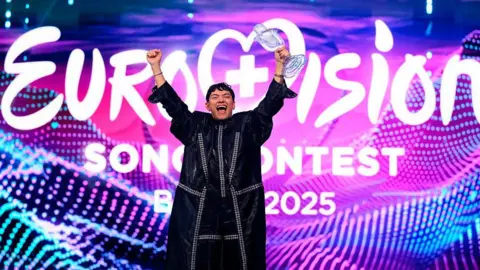
Spanish Prime Minister Pedro Sánchez has advocated for Israel's removal from the Eurovision Song Contest, citing its military operations in Gaza as justification. Sánchez pointed out that since Russia's invasion of Ukraine led to its Eurovision ban in 2022, it is essential not to have "double standards" in such matters. At the recent contest held in Switzerland, Israel came in second place but won the public vote, receiving a maximum 12 points from the Spanish audience.
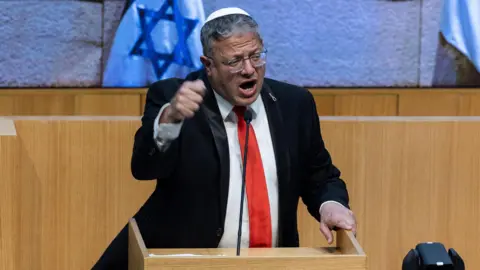
Minister Amichai Chikli from Israel responded to Sánchez's remarks with a social media post, making light of the situation, claiming that the voting outcome was a "slap in the face" for the Spanish Prime Minister. The BBC contacted the European Broadcasting Union (EBU), the organization behind Eurovision, for their perspective on the controversy.
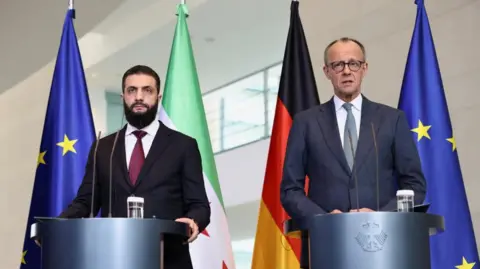
During a press conference in Madrid, Sánchez stated, “Nobody was up in arms when the Russian invasion of Ukraine began three years ago, and [Russia] had to leave international competitions, including Eurovision. Therefore, Israel shouldn't either, as we cannot allow double standards in culture.”
His comments expressed solidarity with the Palestinian people who are suffering due to ongoing hostilities, reinforcing that Spain's and Europe’s commitment to international law and human rights should remain steadfast. The PM has previously labeled Israel as a “genocidal state,” remarks that prompted a formal reprimand from Israel's foreign ministry, which summoned Spain's ambassador.
Despite the political tensions, Israel’s entry maintained popularity among audiences, with Spain giving the maximum points for the song "New Day Will Rise," performed by Yuval Raphael. Following the contest, Spain's public broadcaster RTVE has requested an audit of the voting results, even as it faced pressure from the EBU to refrain from commenting on the situation in Gaza prior to the event. Spain itself finished in 24th place with its entry, "Esa Diva," by Melody.