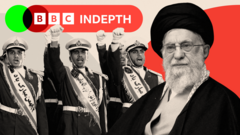
The once invincible figure of Ayatollah Ali Khamenei, now 86, has reportedly spent the last two weeks in hiding, fearing assassination amidst ongoing hostilities with Israel. Following a tenuous ceasefire brokered by President Trump and Qatar's Emir, the supreme leader may be reconsidering his absence from the public eye. However, the nation he emerges to is one riddled with devastation and calls for change, as many Iranians are expected to hold him accountable for the catastrophic war.
During the conflict, Israel gained significant military advantage, executing successful strikes against Iran's military infrastructure. The impact on military resources has been disastrous, as clear indications show a reduced fighting capacity within the Iranian forces. Additionally, Khamenei's past aspirations to achieve nuclear capabilities have suffered setbacks, leading citizens to question the rationale behind these long-term efforts.
As voices of dissent arise, anger and dissatisfaction permeate the nation, manifesting as a desire for leadership change. While many citizens demonstrated a sense of unity during wartime, contrastingly, numerous Iranians oppose Khamenei’s aggressive stance against Israel. Reports indicate that various influential clerics in Qom are being urged to contemplate intervention in Iran’s leadership structure, revealing cracks in the upper echelons of authority.
Civic retaliation and unrest loom as the regime intensifies efforts to quell dissent, exacerbated by recent executions and mass arrests linked to perceived collusion with Israeli forces. Public sentiment is evolving; however, the threat of further tyranny remains palpable as Iran anticipates potential backlashes from a weakened leadership.
Despite Khamenei’s precarious hold on power, concerns over military integrity persist, particularly regarding the retention of ballistic missile capabilities, which could define future confrontations. Experts warn that should Iran's nuclear ambitions resume, the implications for regional stability could be dire.
Khamenei is aware that his time is limited, yet his emergence may symbolize not only a regime still in power but one grappling to remain relevant in a landscape fraught with uncertainty. The struggle between enduring authority and the clamoring for reform casts a long shadow over Iran's future.
During the conflict, Israel gained significant military advantage, executing successful strikes against Iran's military infrastructure. The impact on military resources has been disastrous, as clear indications show a reduced fighting capacity within the Iranian forces. Additionally, Khamenei's past aspirations to achieve nuclear capabilities have suffered setbacks, leading citizens to question the rationale behind these long-term efforts.
As voices of dissent arise, anger and dissatisfaction permeate the nation, manifesting as a desire for leadership change. While many citizens demonstrated a sense of unity during wartime, contrastingly, numerous Iranians oppose Khamenei’s aggressive stance against Israel. Reports indicate that various influential clerics in Qom are being urged to contemplate intervention in Iran’s leadership structure, revealing cracks in the upper echelons of authority.
Civic retaliation and unrest loom as the regime intensifies efforts to quell dissent, exacerbated by recent executions and mass arrests linked to perceived collusion with Israeli forces. Public sentiment is evolving; however, the threat of further tyranny remains palpable as Iran anticipates potential backlashes from a weakened leadership.
Despite Khamenei’s precarious hold on power, concerns over military integrity persist, particularly regarding the retention of ballistic missile capabilities, which could define future confrontations. Experts warn that should Iran's nuclear ambitions resume, the implications for regional stability could be dire.
Khamenei is aware that his time is limited, yet his emergence may symbolize not only a regime still in power but one grappling to remain relevant in a landscape fraught with uncertainty. The struggle between enduring authority and the clamoring for reform casts a long shadow over Iran's future.