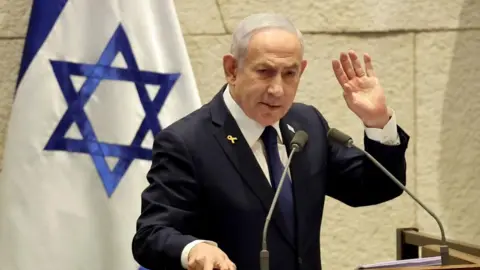
Israeli Prime Minister Benjamin Netanyahu has asked the country's President, Isaac Herzog, for a pardon over corruption cases he has been battling.
The president's office said Herzog would receive opinions from justice officials before considering the request which carries with it significant implications.
Netanyahu has been standing trial for the past five years on charges of bribery, fraud and breach of trust in connection with three separate cases. He denies wrongdoing.
He said in a video message that he would have preferred to see the process to the end but national interest demanded otherwise.
The Israeli opposition says he should admit guilt before seeking a pardon.
Early this month, US President Donald Trump urged Herzog to fully pardon Netanyahu.
At the time, Herzog made it clear that anyone seeking a pardon had to submit a formal request.
On Sunday, his office released the request and a letter by Netanyahu himself, in light of the importance of this extraordinary request and its implications.
It offered no indication of when the president might reach a decision.
In 2020, Benjamin Netanyahu became the first serving Israeli prime minister to stand trial:
- In the first case, prosecutors alleged that he had received gifts - mainly cigars and bottles of champagne - from powerful businessmen in exchange for favours
- He is accused in a second case of offering to help improve the circulation of an Israeli newspaper in exchange for positive coverage
- And in a third, prosecutors have alleged that he promoted regulatory decisions favourable to the controlling shareholder of an Israeli telecoms company in exchange for positive coverage by a news website.
Netanyahu has pleaded not guilty to all the charges and branded the trial as a witch hunt by political opponents.
In a defiant video message, Netanyahu claimed that the cases against him were collapsing, but that the process was tearing Israel apart from within.
He insisted that a pardon would help Israel fend off threats and foster national unity. However, political opponents argue he seeks to conflate his interests with those of the state.
Opposition leader Yair Lapid stated that there could be no pardon without an admission of guilt, while left-wing figures emphasized the necessity of upholding a robust democracy and legal integrity.
As public protests against the government's proposed judicial reforms continue, the backlash against a potential pardon for Netanyahu suggests a growing divide in national sentiment regarding democratic principles and justice.