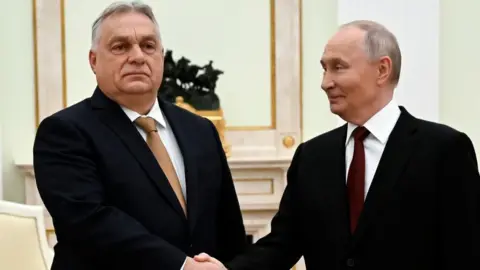
Hungarian Prime Minister Viktor Orban has met President Vladimir Putin in Moscow, just days before crucial discussions regarding the US's efforts to negotiate an end to the ongoing war in Ukraine.
Orban, identified as one of Putin's strongest allies within Europe, has frequently faced backlash from NATO and EU partners for his actions that seem to undermine a unified front against the Kremlin. In a statement aired by Russian state television, Putin acknowledged Orban's 'balanced position' regarding the situation in Ukraine.
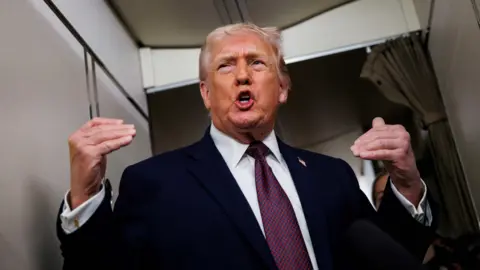
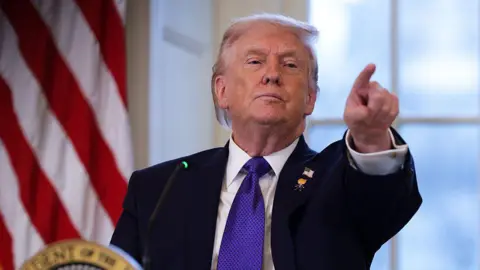
During their meeting, Putin expressed gratitude to Orban for suggesting Budapest as a venue for a potential meeting with former US President Donald Trump, emphasizing the ties that bind them. Orban’s Fidesz party is also preparing for parliamentary elections in April, where polls suggest they may face challenges for the first time in years. Hosting a Trump-Putin summit could significantly enhance his re-election prospects.
This visit is part of Orban's strategy to secure Russian energy supplies for Hungary, Serbia, and Slovakia amid rising tensions within Europe about energy imports. Earlier this month, a deal in Washington ensured Orban’s exemption from US sanctions on Russian fuel, though he must maintain political power for those terms to hold.
Since Russia's full-scale invasion of Ukraine in 2022, Orban has publicly positioned himself as a proponent of peace, critiquing EU leaders for their military support to Ukraine while advocating for direct negotiations with Russia. His party's stance has led to an increasingly strained relationship with fellow European nations, particularly as Hungary remains heavily reliant on Russian energy imports.
Looking ahead, Hungary is under EU pressure to eliminate all Russian energy imports by 2027. With current imports comprising over 80% of Hungary's oil and gas, the implications of Orban's meeting in Moscow extend beyond immediate diplomatic relations to future Hungarian energy security and its consequences on EU unity.
Moreover, with the Kremlin showing little inclination towards compromising on Ukrainian matters, Orban may seek to leverage Moscow’s support to uphold domestic energy stability, potentially causing further friction with Brussels, as they push for more stringent sanctions against Russia.