In brief
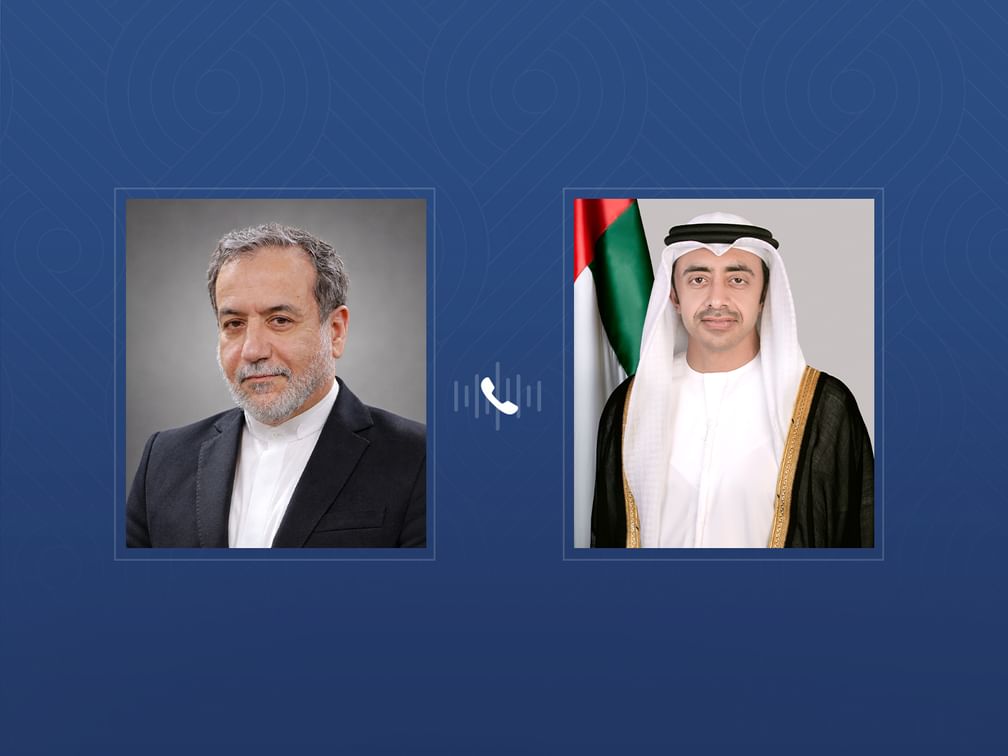
On Thursday evening, Abu Dhabi Deputy Prime Minister and Foreign Minister Sheikh Abdullah bin Zayed Al Nahyan received a call from Iran’s Minister of Foreign Affairs Abbas Araghchi. The two leaders discussed the region’s overall situation and recent developments, with the UAE underscoring the need for de‑escalation and strengthened diplomatic efforts. While the dialogue signals a potential pivot toward greater cooperation, concrete outcomes remain unclear.
On the evening of Thursday, November 5, 2026, at approximately 11:52 PM local time, H.H. Sheikh Abdullah bin Zayed Al Nahyan, the United Arab Emirates’ Deputy Prime Minister and Minister of Foreign Affairs, received a telephone call from Abbas Araghchi, the Islamic Republic of Iran’s Minister of Foreign Affairs.
The call, carried out from the UAE capital of Abu Dhabi, focused on the “overall situation in the region and the latest regional developments,” WAM reports. Both officials commented on the necessity of de‑escalation and the advancement of diplomatic efforts aimed at reinforcing security and stability across the Middle East.
In the announcement, the United Arab Emirates emphasized that its engagement with Iran is part of a broader initiative to enhance regional stability. The call illustrates a continuation of the UAE’s diplomatic outreach to neighboring states amid ongoing tensions in the broader geopolitical landscape.
While the briefing highlighted substantive discussion topics, WAM did not disclose specifics on any agreements or policy shifts emerging from the conversation. The UAE’s statement underscores a focus on diplomatic dialogue as a means to mitigate conflict and promote collective security interests.
Iran’s side, represented by Araghchi, similarly signaled a willingness to discuss the region’s challenges. The conversation’s scope, however, remains opaque, with no explicit details released on the topics covered or the outcomes anticipated.
This exchange follows ongoing diplomatic efforts by Middle Eastern states to curb flare‑ups and foster a collaborative security framework. By calling a key Iranian official, the UAE signals a potential shift toward direct engagement with Tehran on regional concerns.
In the absence of concrete policy announcements, observers note that the discussion could be part of a longer‑term strategy by the UAE to pursue broader diplomatic engagement with Iran. The call may also reflect an internal assessment of the balance between maintaining pressure on Tehran and seeking constructive dialogue.
Conclusions about the impact of this conversation remain uncertain. No official commitments were announced, and the specifics of the matters discussed or how they will influence regional policy are not yet known. Future developments in this line of communication will determine whether the UAE’s outreach results in tangible diplomatic progress or remains primarily symbolic.