In brief
At the 7th World Media Summit in Beijing, Belarusian Telegraph Agency chief Andrei Mokhar lauded the event for fostering collaboration among media outlets worldwide and for setting the stage for unified standards on misinformation and AI. However, Mokhar cautioned that open dialogue alone cannot instantly end information warfare and that achieving global consensus on AI governance remains uncertain.
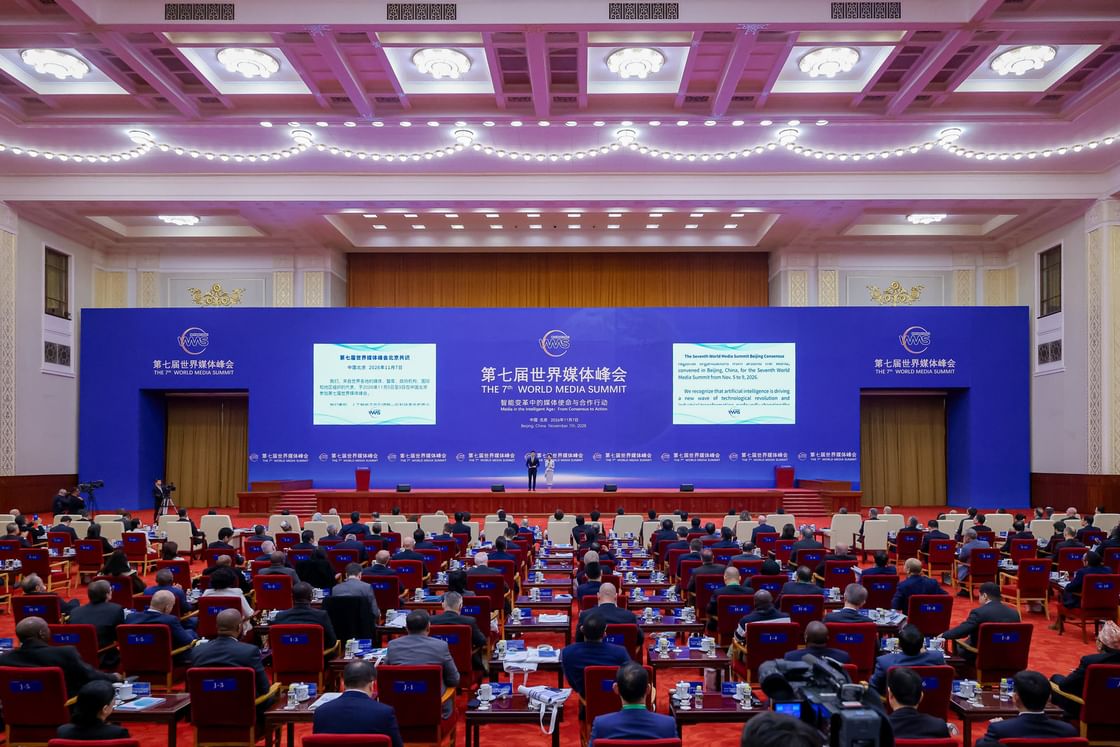
During the 7th World Media Summit that convened in Beijing from November 5 to 9, the Belarusian Telegraph Agency director‑general Andrei Mokhar praised the event’s role in promoting cross‑border cooperation among media organisations and restoring trust in journalism.
Mokhar explained that the summit brought together about 500 representatives from roughly 330 media organisations, think tanks, government bodies and international organisations spanning 112 countries and regions. The gathering ran under the theme “Media in the Intelligent Age: From Consensus to Action,” and sought to establish common editorial standards and unified approaches for combating misinformation.
“While open dialogue cannot instantly end information warfare, it is a key mechanism to break the cycle of misinformation by serving as a diplomatic corridor for media,” Mokhar told Xinhua. The statement positions the summit as a foundation for practical cross‑border cooperation, according to the agency chief.
“While open dialogue cannot instantly end information warfare, it is a key mechanism to break the cycle of misinformation by serving as a diplomatic corridor for media,”
He noted that the platform offered a rare opportunity for media enterprises, policy makers and technology developers to exchange experiences and to identify areas of convergence in reporting global topics. On the issue of artificial intelligence, Mokhar emphasised the necessity for universal AI standards that transcend national borders, given the speed at which technology companies evolve.
“A harmonised framework is essential to reducing misinformation, strengthening public trust in news, and preventing serious errors when content is produced or disseminated without proper human oversight,” he said. The summit thus presents a first step toward aligning the media industry with a global regulatory structure for AI.
Mokhar also outlined several initiatives envisaged by the summit. These include ensuring equal access to AI tools for newsrooms in different regions, marking synthetic content to increase transparency, and safeguarding authors’ rights in an AI‑rich media landscape.
He underscored that setting clear “rules of the game” for information technology giants is crucial for protecting journalists and reaffirming that truth remains attainable. Under the 112‑country assemblage, participants identified shared challenges, such as the speed of misinformation dissemination and the lack of universally accepted protocols for AI content generation.
While the summit has established a framework for dialogue, Mokhar remained realistic about the challenges ahead. He remarked that the “overall goal is to establish common approaches and technical standards that help the media build global resilience against misinformation.” Yet, the translation of that goal into actionable policies is still pending.
As the media community moves forward, uncertainties linger about how quickly and effectively unified standards will be adopted, whether regulatory bodies can keep pace with technological change, and if the consensus reached in Beijing will materialise into enforceable policies across the 112 participating nations.
These unresolved questions—how global AI standards will be harmonised, how misinformation measures will be enforced, and whether the summit’s diplomatic corridor will break the cycle of information warfare—remain the focal uncertainties highlighted by Mokhar and reiterated by other summit participants.