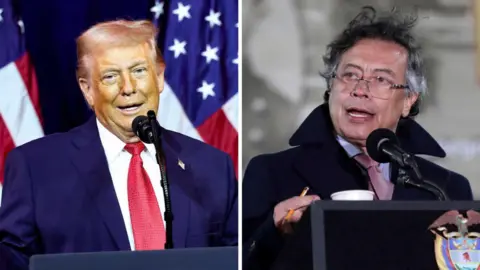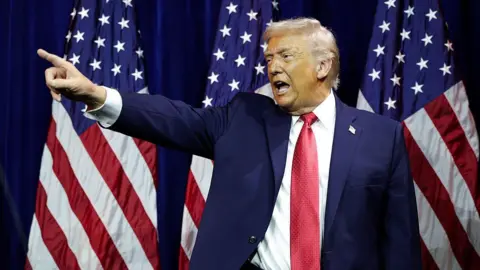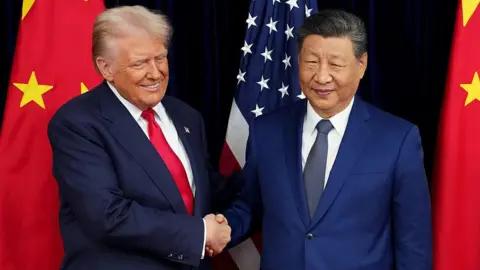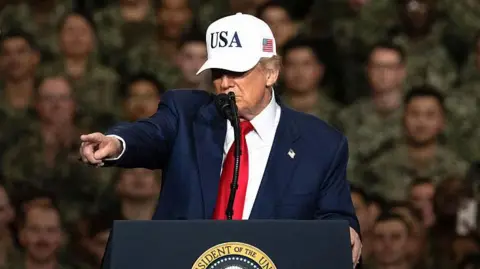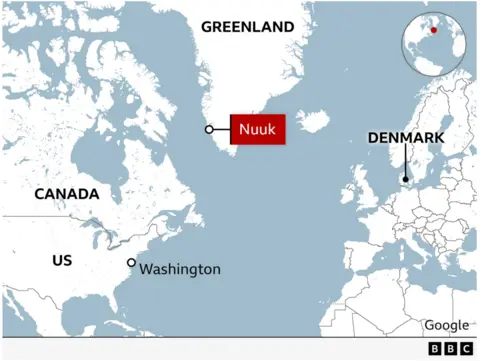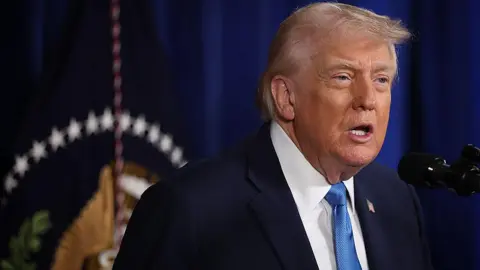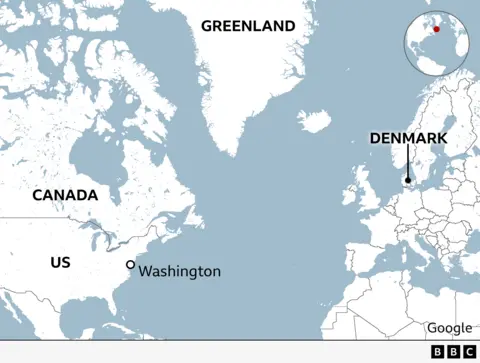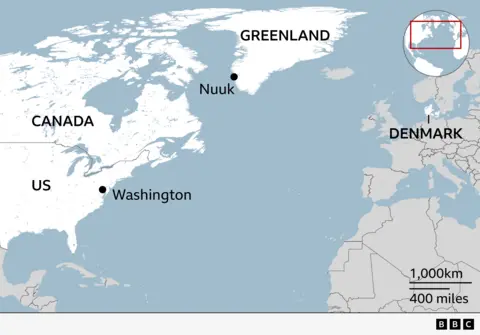
The White House has confirmed that US President Donald Trump is in discussions regarding 'a range of options' to acquire Greenland, which may reportedly include military action, supporting claims it is a 'national security priority'. This statement follows a rally of support for Denmark from European leaders, who expressed solidarity against what they view as Trump's expansionist ambitions for the Arctic territory.
Trump's assertion that Greenland is 'needed' for security was met with a stern warning from Danish Prime Minister Mette Frederiksen, asserting that any military invasion would tarnish NATO's integrity. The remarks from the White House further clarify that military options, although not being discussed lightly, remain a part of the Presidential arsenal to achieve foreign policy goals.
Despite the US's claims, a joint statement from the UK, France, Germany, Italy, Poland, Spain, and Denmark emphasized that 'Greenland belongs to its people', reinforcing the call for respect regarding the island's sovereignty and decisions regarding its future.
Greenland's Prime Minister Jens-Frederik Nielsen urged for respectful dialogue, highlighting the recognition of international law in conversations about Greenland's status. Tensions have risen globally as the backdrop of increasing military and economic interests in the Arctic includes notable adversaries such as Russia and China, increasing calls for cooperation amongst NATO allies.
In discussing potential acquisition routes, options mentioned by US officials have included outright purchase and forming a 'Compact of Free Association' with Greenland. A senior US official casually remarked on the acceptance of military options for the acquisition, an assertion that has raised eyebrows and concerns about the ramifications of such a decision.
Despite Flint's allure due to immense potential resources, public opinion in Greenland has largely opposed becoming part of the US, preferring to prioritize their own governance and interests over military acquisition frameworks proposed by the US administration. Local voices echoing sentiments of fear and territorial integrity raise essential questions about what future directions these discussions will take in a world increasingly divided by competing national interests.