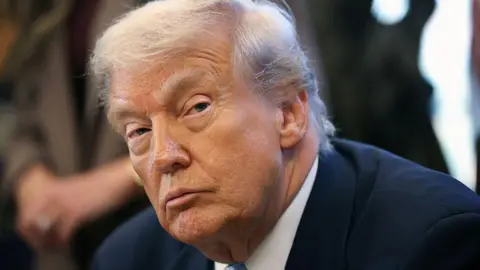
US President Donald Trump has said that the airspace around Venezuela should be considered closed. “To all Airlines, Pilots, Drug Dealers, and Human Traffickers, please consider THE AIRSPACE ABOVE AND SURROUNDING VENEZUELA TO BE CLOSED IN ITS ENTIRETY,” Trump stated on social media.
The US does not have the legal authority to close another country's airspace, but Trump's comments may create travel uncertainty and deter airlines from operating there.
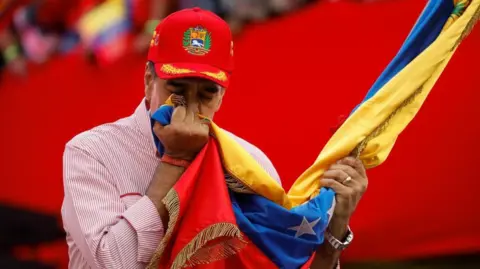
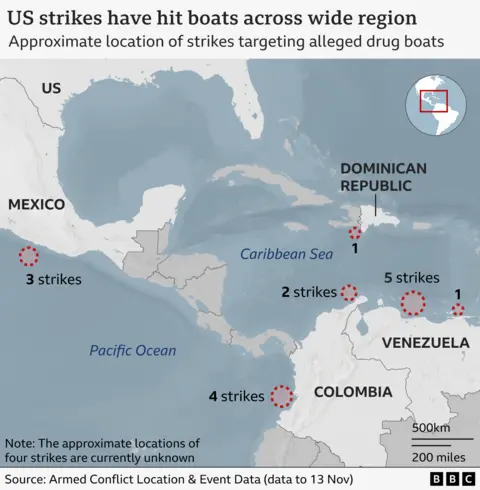
As tensions mount, the US has been increasing its military presence in the Caribbean, which officials claim is aimed at combatting drug smuggling. In contrast, Venezuelan President Nicolás Maduro has dismissed these accusations as an attempt to destabilize his government.
Venezuela has yet to respond to Trump's remarks, while the White House has not provided immediate comments on the matter. This statement follows a warning from the US Federal Aviation Administration (FAA) regarding heightened military activity in and around Venezuela.
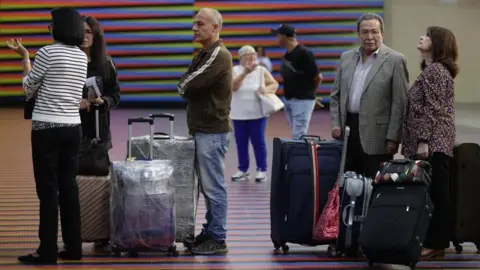
Additionally, Venezuela has responded to these rising tensions by banning six international airlines—Iberia, TAP Portugal, Gol, Latam, Avianca, and Turkish Airlines—from landing, after they did not meet a 48-hour deadline to resume their flights.
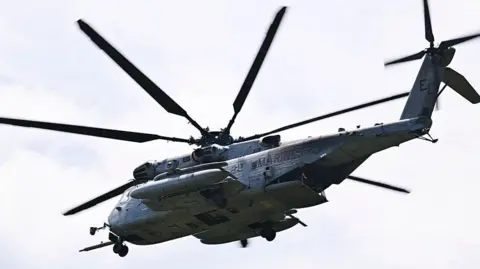
The deployment of the USS Gerald Ford, the world's largest aircraft carrier, along with about 15,000 troops near Venezuela, marks the largest US military mobilization in the region since the 1989 Panama invasion. Trump has indicated that US operations aimed at halting drug trafficking will soon escalate further.
Venezuelan authorities see US actions as part of a broader strategy to remove Maduro from power, amid allegations that the US is using a fabricated narrative regarding drug trafficking to justify its military actions.
As geopolitical tensions rise, the implications of Trump's directive could leave both travelers and airlines in a state of uncertainty regarding their travels to and from Venezuela.