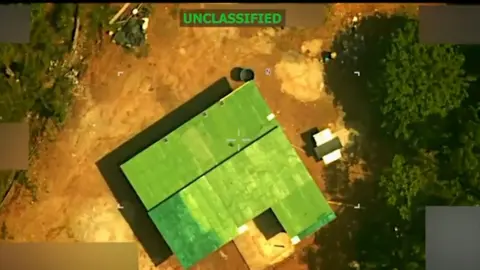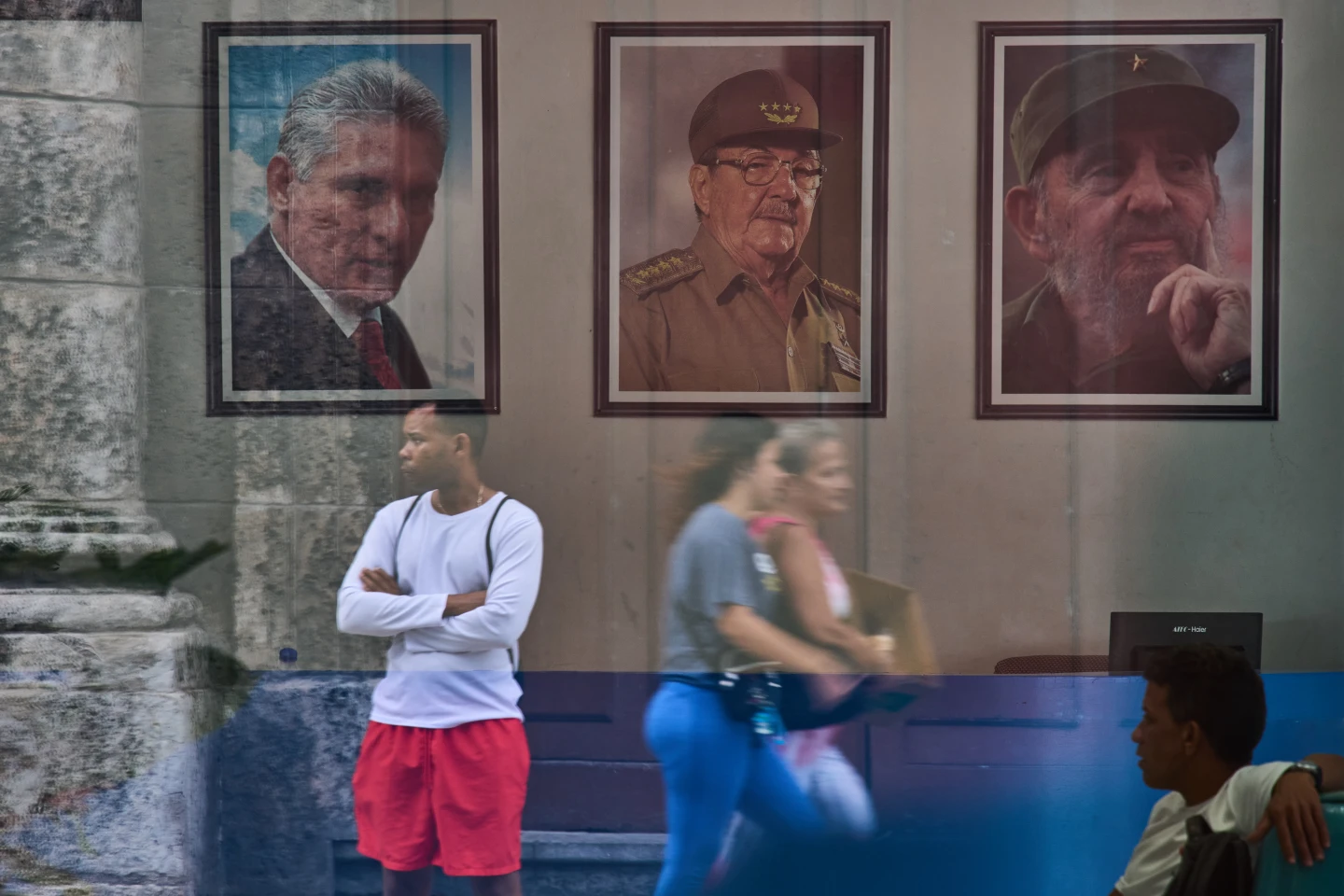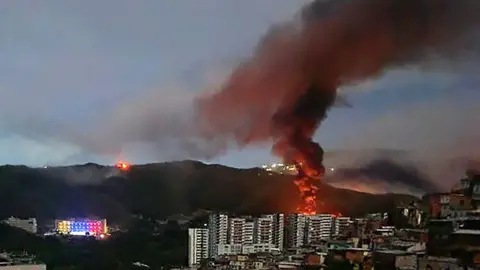
The Cuban government says 32 of its nationals were killed during the US operation to seize Venezuelan leader Nicolás Maduro.
It described the dead as members of its armed forces and intelligence agencies who were killed 'in combat actions', declaring two days of national mourning.
The armed forces added the Cubans 'fell, after fierce resistance, in direct combat against the attackers or as a result of bombardments of installations.'
Cuba, a long-standing ally of Venezuela, has supported Maduro with his personal security detail and has personnel throughout the Venezuelan military.
Cuban President Miguel Díaz-Canel stated that the country had been providing protection to Maduro and his wife 'at the request' of Venezuela.
US spies had been tracking Maduro's movements for months before the forces struck, according to US General Dan Caine.
General Caine mentioned that they were aware of where Maduro moved, lived, traveled, dined, and worked.
The New York Times noted that the CIA had a 'Venezuelan source' who informed them of Maduro's exact location.
Many of the fatalities are believed to have been part of Maduro's close security detail, who were present at the time of the operation.
Venezuela has not confirmed the number of casualties, but its armed forces stated that a 'large part' of Maduro's security team were among the casualties.
An official statement from the Cuban government read: 'Our compatriots fulfilled their duty with dignity and heroism.'
The total death toll has been reported to stand at 80 according to an unnamed Venezuelan official, although this has yet to be independently verified by BBC News.
Following the seizure of Maduro, speculation has emerged regarding potential future US operations against Cuba, given the historical tensions between the two nations.
US President Donald Trump suggested that military action may not be necessary as 'Cuba is ready to fall', whereas Secretary of State Marco Rubio described Cuba as a 'disaster' run by 'incompetent, senile men.'
Trump's administration has reinforced restrictions on Cuba, reversing policies set by his predecessor aimed at easing pressure on the country. The economic embargo, originally imposed in 1962, continues despite international calls for its end.