In brief
Indonesia’s worst wildfire season in a decade has sent an amber smog across the South East Asian archipelago, choking cities in Indonesia, Singapore and Malaysia. The fires – largely driven by slash‑and‑burn agricultural practices – have triggered emergency air‑quality alerts and public outcry. Governments have rolled back fires, imposed licences suspensions, and invoked Singapore’s Trans‑Boundary Haze Pollution Act, sparking diplomatic tensions. Environmental groups point to multinational corporations as key culprits, while civil society pushes for national disaster declarations that would unlock health‑care funding. In speculative timelines, stronger enforcement could end the haze early, or in the worst case, unchecked fires could cost regional economies in the billions. These scenarios stress the vital need for coordinated regulatory action, corporate responsibility and cross‑border cooperation.
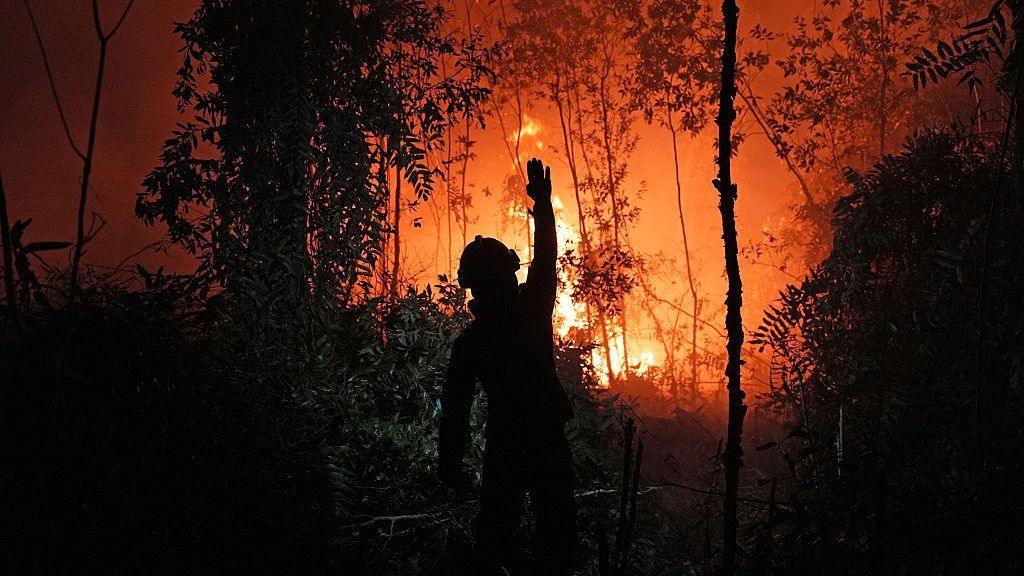
Indonesia’s raging wildfires are unleashing a toxic haze that blankets the whole South East Asian region. The ash‑laden winds have turned the air on Kalimantan and Sumatra into a heavy, amber‑colored smog, forcing health alerts across Singapore, Malaysia and beyond.
The crisis comes amid an unusually potent El Niño cycle, which combined with peat‑land ignition has amplified the fires’ intensity. According to the independent platform Nusantara Atlas, over a million fire hotspots have scorched roughly 900,000 hectares of land in a single season—an unprecedented scale that Hill James of WWF-Indonesia notes poses a “critical health risk” to millions of people.
Governments find themselves in a speed‑race against pollutants: Jakarta has suspended licences for 26 companies tied to the fires, while Singapore’s new Trans‑Boundary Haze Pollution Act empowers authorities to summon foreign firms that contribute to the haze. Yet diplomatic friction remains sharp, as Jakarta’s officials accuse Singapore of overreaching while Singapore’s regulators insist that international actors must share responsibility.
Activists sharpen their focus on multinational palm‑oil conglomerates linked to sprawling plantations. Greenpeace flagged First Resources’ Indonesian subsidiaries for more than 30 blaze points between August and September, while Kuala Lumpur Kepong’s PT Menteng Jaya Sawit Perdana reported 19 recording points—many beyond its own concession areas. The companies maintain “strict zero burning” policies, but critics argue that enforcement on paper fails to curb real‑world practices.
Beyond corporate culpability, the hazy crisis has galvanized civil society. In Pontianak, activists have lodged a class‑action lawsuit on behalf of ordinary citizens, demanding that the Indonesian government declare the haze a national disaster to unlock health‑care coverage. Similar legal pressure was tested last year in South Sumatra but was dismissed, underscoring the legal complexity of translating public health into policy action.
If nothing changes, the smog could linger for months, exacerbating respiratory illnesses and economic damage across the region. Conversely, a coordinated crackdown—with stricter enforcement, cross‑border legal mechanisms and stricter land‑use regulations—could cut the haze trajectory by half, saving health care budgets and protecting livelihoods. These divergent futures illustrate a broader question: how will Southeast Asia balance rapid agricultural development with the imperative to safeguard public and planetary health?
As Jakarta pledges to thank Singapore and Malaysia for assistance while refusing a formal request for aid, the moment hangs on a delicate balance of diplomacy, economic interest and environmental conscience. The next weeks will determine whether this year’s haze signals a turning point or a repeat of a toxic tradition that has cost millions of breaths across the Southeast Asian sky.