In brief
The Kremlin has agreed to resume technical-level talks with Ukraine and the US, yet top advisers remain lukewarm about meaningful progress. Norwegian Prime Minister Jonas Gahr Støre hosted Oslo talks that paved the way for a potential truce, but President Vladimir Putin appears reluctant to share a table with Ukrainian President Volodymyr Zelensky. U.S. special envoy Steve Witkoff highlighted that work remains, while Russian foreign‑policy aide Yuri Ushakov dismissed recent discussions as largely ineffective. In parallel, President Donald Trump has eased sanctions on Moscow and purchased Russian diesel, which Russian commentators say has eased pressure on Moscow. A future Putin‑Zelensky‑Trump summit seems unlikely, though a Moscow‑centric meeting in China could bring the three leaders together on the sidelines of the APEC summit, sparking comparisons to the historic Yalta Conference.
After two days of diplomacy – in Norway’s capital and Russia’s St Petersburg – is the war in Ukraine any closer to ending?
In Oslo, the Norwegian prime minister described a series of talks between Ukrainian President Volodymyr Zelensky, U.S. President Donald Trump’s special envoy Steve Witkoff and European representatives as "good and constructive". The hope was that the Oslo dialogue would pave the way for a historic meeting between Putin, Zelensky and Trump to strike a cease‑fire.
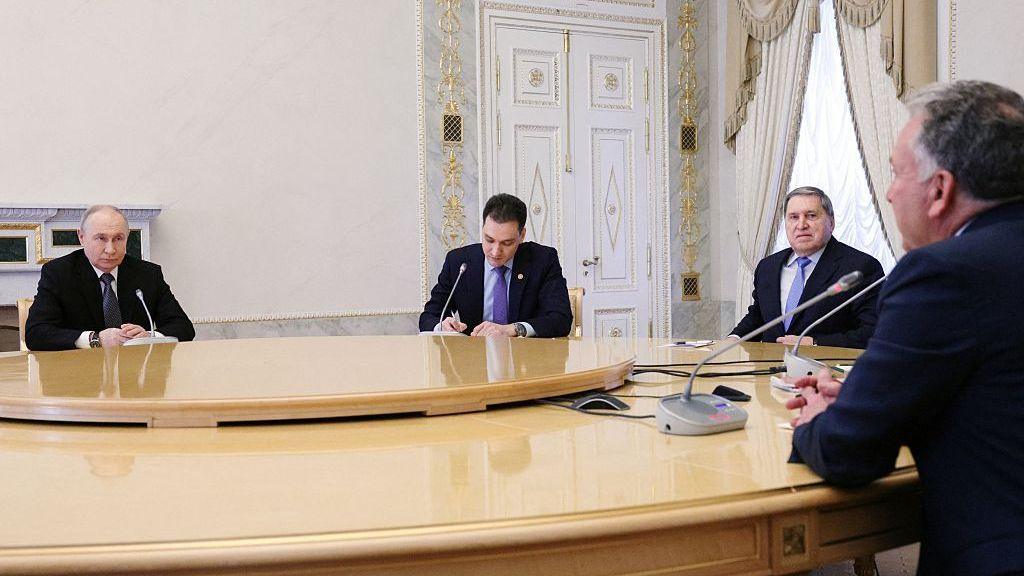
However, Kremlin officials remain unconvinced about the viability of such a summit. Russian foreign‑policy aide Yuri Ushakov, who attended the St Petersburg talks, said that Witkoff’s report of the Oslo discussions was "not particularly useful" in resolving the war and that the Kremlin’s stance was, in effect, a wait‑and‑see approach.
Ushakov echoed this sentiment on state television, acknowledging that the discussion had moved in a "positive" direction, but the very vague statements suggested little real traction. "I don’t know how close we are getting," he said, while remarking that the Kremlin observed the situation with an eye to upcoming winter hardships that might tip the balance of power in Moscow’s favour.
In Moscow, the Kremlin has taken a cautious yet open approach, saying it is ready to resume technical‑level talks with Ukraine and the US, possibly in Abu Dhabi next month. Yet the Kremlin’s readiness seems tied to an internal assessment that Putin feels no immediate pressure to end the war.
Meanwhile, President Trump’s recent decision to pause a number of sanctions on Moscow and to purchase Russian diesel has been interpreted by some Russian commentators as a sign that the West is willing to engage more constructively with the Kremlin. "Right now Trump is the only leader in the Western world who is doing something for peace," Russian MP and TV anchor Evgeny Popov claimed, though he cautioned that such "peace" would come on Russian terms.
A direct Putin‑Zelensky‑Trump summit remains unlikely in the near term, but experts point to a possible meeting of the three leaders on the sidelines of the APEC summit in China next month. If it occurs, the occasion could revive the old moniker "The New Yalta", echoing the 1945 conference that reshaped post‑war Europe.
With the winter front looming, the Kremlin has all the incentives to continue pressing its advantage. Its openness to a technical dialogue might prove a diplomatic façade, while the real expectation remains that a decisive Russian offensive could force Ukraine to negotiate from a position of weakness.