In response to rising security concerns following Russia's invasion of Ukraine, several European countries are reevaluating their military service structures. From robust conscription measures in nations like Finland and Sweden to newly implemented voluntary programs in Belgium, the continent is witnessing a pivotal shift in recruitment strategies.
Historically, the Cold War saw extensive use of conscripted armies within NATO, but as global threats evolve, so too do recruitment processes. Nine NATO members continue to mandate military service: Denmark, Estonia, Finland, Greece, Latvia, Lithuania, Norway, Sweden, and Turkey, with most requiring a commitment of 6 to 12 months.
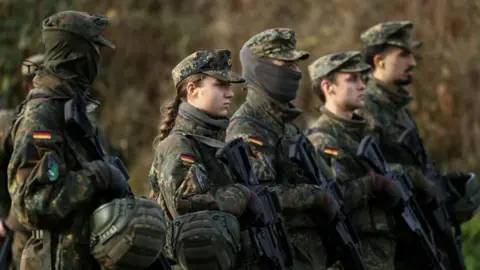
In the wake of contemporary threats, other NATO members, particularly Belgium and Germany, are moving towards an increase in volunteer military personnel. Belgium's recent initiative invites 17-year-olds to join the military with the promise of around €2,000 monthly compensation, aiming to expand the reserves significantly. Similarly, Germany, having abolished conscription in 2011, is also gearing up to engage potential recruits through a reformed system of voluntary service.
However, public opinion is divided. While polls in Germany reflect a majority support for compulsory service, opposition is prevalent, especially among younger demographics. Protest movements against military service reforms indicate significant societal trepidation about being drawn into conflict.
The shifts don't end there; France has also proposed a new scheme designed to recruit volunteers for military training, with plans to gradually increase the numbers involved by 2035. Such efforts resonate with President Macron's call for the nation to prepare adequately for potential threats.
While other European states, like Switzerland and Austria, maintain their own systems of compulsory or voluntary service, this evolving landscape highlights a broader, shared objective amongst NATO nations: enhancing military readiness in an increasingly uncertain world.