In a landmark moment, King Felipe VI of Spain has publicly acknowledged the 'abuse' and injustices committed during the conquest of Mexico, reopening a critical discussion on the colonial history that has often been a source of diplomatic tension between the two nations.
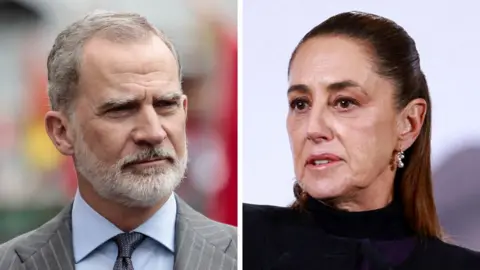
His comments were made during a visit to an exhibition dedicated to indigenous women at Madrid's National Archaeological Museum, where he stated, 'There has been a lot of abuse during the conquest of the territory that would become Mexico.' This admission marks the first such recognition by a Spanish monarch and has been lauded by Mexican President Claudia Sheinbaum as a significant gesture towards reconciliation.
King Felipe further elaborated, acknowledging that certain actions from the past cannot be viewed with pride through contemporary standards. He emphasized the importance of dialogue regarding historical grievances, although the path forward remains uncertain.
Sheinbaum welcomed the king's statement, suggesting it could pave the way for vital conversations about the excesses and exterminations that accompanied Spain's colonial endeavors. Previously, there had been calls from Mexican leaders, including former President Andrés Manuel López Obrador, for Spain to apologize for its historical actions.
The discussion surrounding King Felipe's remarks is not without its controversies, however. The conservative People's Party has criticized the king's acknowledgment, arguing against an anachronistic evaluation of historical events. Far-right parties like Vox defended Spain's legacy in the Americas, attempting to minimize the impact of their colonial actions.
This renewed focus on Spain’s colonial past arrives as 2021 marked the 500th anniversary of the fall of Tenochtitlán, central to Mexico's history, and has reignited debates within Spain about its own historical identity. While Spain has not yet initiated substantial efforts to reassess its colonial history as seen in other countries, the conversation sparked by King Felipe might signal a shift in public discourse.