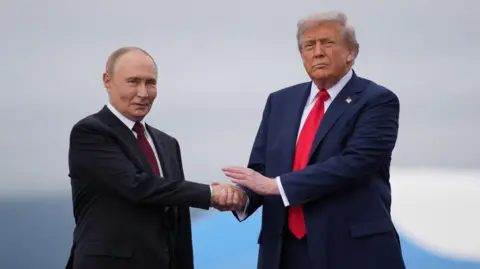
In a significant diplomatic response, Russia has welcomed US President Donald Trump's new National Security Strategy, claiming that its contents are largely consistent with Moscow's own vision for international relations.
The 33-page document, recently unveiled by the US administration, brings to light the perception that Europe is facing a threat of civilizational erasure while also refraining from labeling Russia as a threat to the US itself.
Among its priorities, the strategy emphasizes combatting foreign influence, addressing mass migration, and rejecting what it defines as EU censorship practices. These points have triggered pushback from several EU officials and analysts who argue that the wording resembles Kremlin narratives.
Kremlin spokesperson Dmitry Peskov publicly acknowledged this alignment, stating, The adjustments we're seeing... are largely consistent with our vision, and deemed it a positive move. However, he also noted that Moscow would take time to thoroughly analyze the implications of the document.
The strategy notably softens the language towards Russia, prompting concerns among EU officials that this could undermine the West's unity in addressing the ongoing conflict in Ukraine.
Notably, the document asserts that the EU has obstructed US initiatives to reach a resolution in Ukraine, suggesting a need for the US to work toward restoring strategic stability with Russia to revitalize European economies. It also endorses efforts to influence political dynamics within Europe, where it advises resistance against the current trajectory of European nations.
Moreover, the strategy calls for a revival of Western identity, claiming Europe could be unrecognizable in 20 years or less and identifying its economic challenges as secondary to the looming threat of civilizational collapse.
The document contrasts the notion of a steadfast alliance with robust military and economic capacities among European nations, with a celebratory mention of patriotic European parties that encourage a revival of national spirit.
As the EU continues ongoing negotiations with the Trump administration to establish a peace deal in Ukraine, officials remain secure in their alliance with the US while raising critical questions about the document’s framework. German Foreign Minister Johann Wadephul emphasized that security issues are paramount, asserting that matters of free expression should not infiltrate strategic discussions.
Former Swedish Prime Minister Carl Bildt also criticized the document's tone, asserting it aligns too closely with extreme right ideologies, coinciding with the Trump administration's connections to far-right movements in Europe.
The strategy not only promotes an America First policy but addresses military readiness, including a directive for increased defense spending from Japan, South Korea, and other allies while hinting at potential military operations in Venezuela.
State representatives in the US Congress expressed alarm over the possibility that this strategy may harm America's international standing, with significant figures branding it a threat to longstanding diplomatic traditions.