In brief
As tensions escalate in Myanmar, Senior Gen. Min Aung Hlaing is now under scrutiny from the International Criminal Court for alleged crimes against humanity amid ongoing persecution of the Rohingya minority.
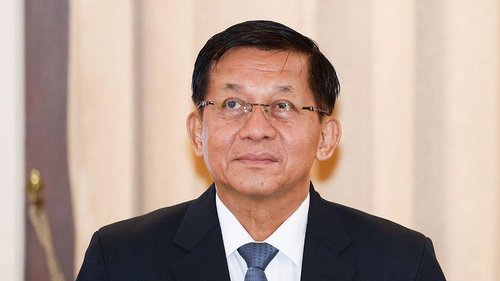
Senior General Min Aung Hlaing, the leader of Myanmar's military junta, was officially accused of crimes against humanity by the International Criminal Court's chief prosecutor on Wednesday, heralding dark times for the war-ridden nation. Karim Khan, the prosecutor, filed a request for an arrest warrant against the general, who orchestrated brutal military actions against Myanmar’s Rohingya Muslim minority in 2017. This violent campaign led to the deaths of civilians, widespread sexual violence, and the destruction of homes, forcing over one million Rohingya to seek refuge in neighboring Bangladesh.In his statement, Mr. Khan indicated that further arrest warrants for other high-ranking Myanmar officials would follow. An understanding of General Min Aung Hlaing’s complex role and heavy-handed governance provides insight into the country's current plight. The general's rise to power accelerated with a military coup in 2021, which displaced the prior democratic government. After seizing control, he appointed himself to civilian roles, including prime minister, amplifying the authoritarian grip of his regime. The United Nations has reported alarming statistics since the coup: the death toll among civilians surpasses 5,000 while over three million citizens have been displaced, with more than half the population now engulfed in poverty.Hlaing's regime has suppressed political dissent brutally, targeting pro-democracy advocates and instilling fear among civilians who resist military conscription. Among those imprisoned is renowned Nobel laureate Daw Aung San Suu Kyi, who faces a long-term sentence widely regarded as politically inspired. The Assistance Association for Political Prisoners (Burma) highlights the grim nature of detentions, reporting over 27,700 arrests and over 21,000 still in custody since the coup, with more than 260 fatalities attributed to torture during imprisonment.Min Aung Hlaing’s military career has been characterized by a history of violence against ethnic minorities. After graduating from the Defense Services Academy in 1977, he quickly rose through the military ranks, accumulating a reputation for aggression. Appointed as commander in chief in 2011, he operates independently of civilian oversight, as dictated by Myanmar's 2008 Constitution.Internationally, in 2019, the U.S. government imposed travel sanctions on Min Aung Hlaing and others, citing their involvement in severe human rights violations. Former Secretary of State Mike Pompeo expressed profound concerns regarding the government's failure to address these violations and the military's ongoing abuse of human rights throughout the country. The world now watches closely as developments unfold with the looming potential of accountability for Myanmar's leadership.