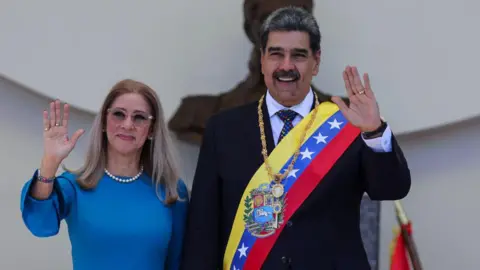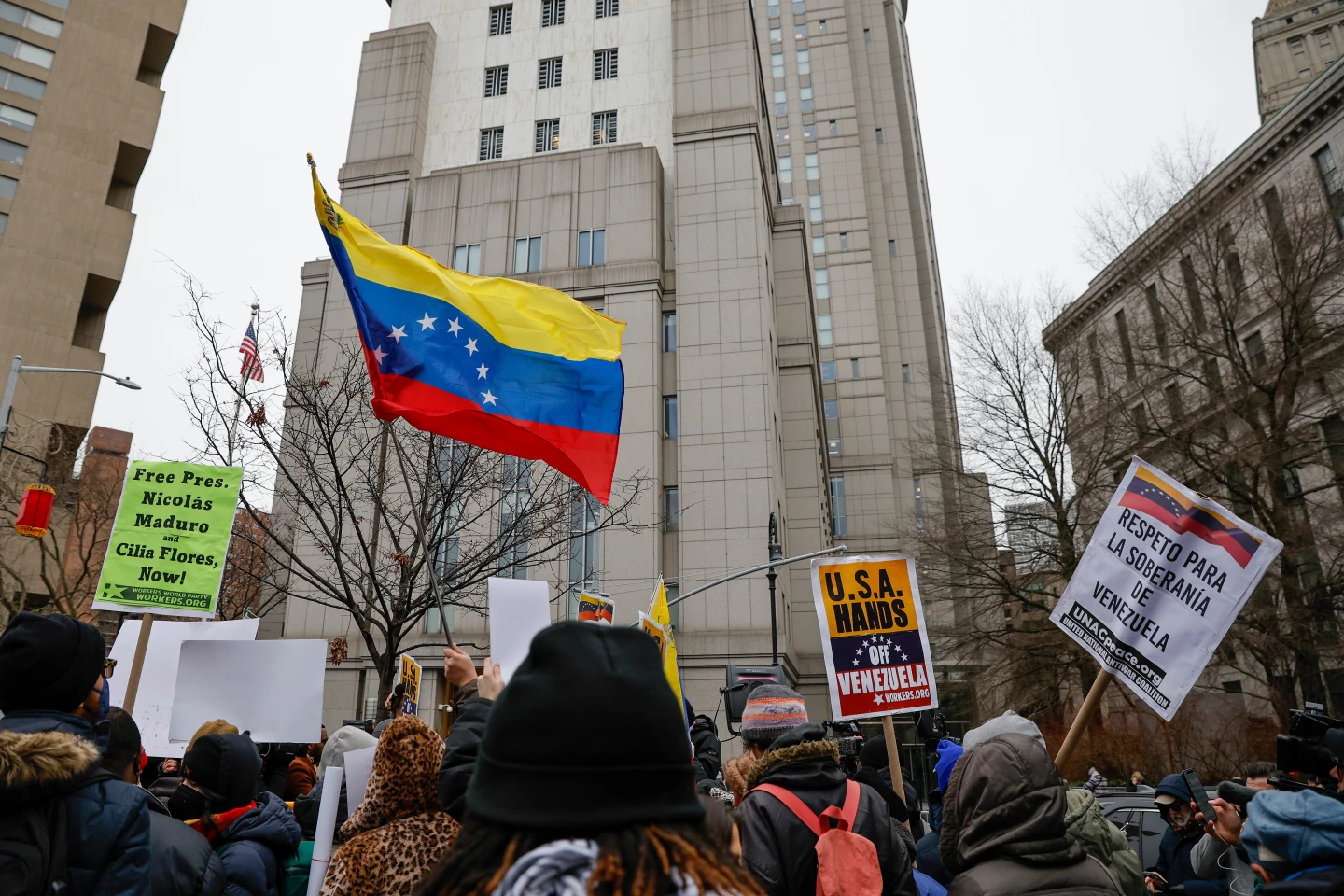
NEW YORK — Nicolás Maduro's first court appearance in the United States marked a significant moment in his tumultuous political journey, where he staunchly claimed to still be the legitimate president of Venezuela. His arraignment comes as U.S. prosecutors have leveled serious drug trafficking charges against him and his wife, Cilia Flores, following their dramatic capture by U.S. forces in a nighttime operation.
During Monday's proceedings, the former Venezuelan leader maintained his innocence, pleading not guilty to all charges. The U.S. government had classified the military operation as a necessary law enforcement action to confront Maduro’s alleged involvement in drug trafficking conspiracy, an accusation that dates back six years. Maduro contested the legality of his capture in court, describing himself as a prisoner of war, a claim that adds further layers to his complex legal situation.
As they remain confined in a New York jail awaiting their next court date, scheduled for March 17, various legal scenarios could unfold. Highly unusual for defendants facing such grave allegations, their potential request for bail could complicate the proceedings. U.S. federal judges are typically reluctant to grant bail in such cases, particularly given Maduro's charges of narco-terrorism conspiracy.
Flores' legal counsel reported that she sustained significant injuries during their capture, necessitating medical attention, including an X-ray for possible rib fractures. Maduro's lawyer noted that the former president also has ongoing health concerns needing treatment. The federal facility where they are detained is not without criticism regarding its medical treatment protocols, raising concerns about their care while incarcerated.
Amidst the unfolding legal drama, both Maduro and Flores are entitled to consular access as foreign nationals facing criminal charges. Maduro has expressed a desire for such visits, although prior tensions with U.S. authorities have rendered their specifics unclear, including the facilitation of his legal fees under stringent financial sanctions.
With their legal team evolving to include constitutional law experts, Maduro's defense strategy appears poised to challenge the indictment’s legitimacy, banking on claims of sovereign immunity as a head of state, a defense that has historical precedent but is rarely successful. The outcome of this case could have lasting implications not only for Maduro and Flores but also for U.S.-Venezuela relations moving forward.