Myanmar has denied committing genocide against the Rohingya people as it begins its defense at the International Court of Justice (ICJ) on the allegations put forth by The Gambia, stating that the latter has failed to provide sufficient proof.
Government representative Ko Ko Hlaing told judges that the allegations are unsubstantiated and are part of a broader narrative aimed at undermining Myanmar's credibility.
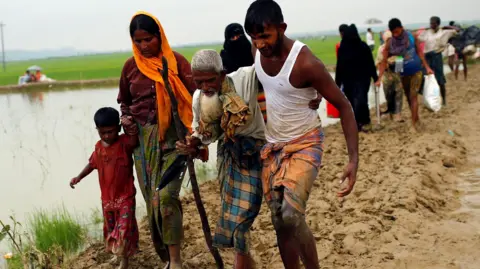
Earlier in the week, The Gambia's foreign minister, Dawda Jallow, asserted that Myanmar's intent is to eliminate the minority Muslim population through genocidal policies. The conflict has its roots in the 2017 army crackdown, which resulted in thousands of deaths and led to over 700,000 Rohingya fleeing to Bangladesh.
A report issued by the UN in 2018 urged investigations into Myanmar’s military leaders for genocide and crimes against humanity, claims which Myanmar has firmly rejected.
In response, Hlaing defended the military operations, claiming they were necessary counter-terrorism actions against insurgent threats in northern Rakhine State, home to most Rohingya.
The Gambia's stance, supported by the Organisation of Islamic Cooperation, highlights decades of suffering endured by the Rohingya, leading to the need for a judicial resolution of the humanitarian crisis.
The ICJ is expected to conclude its hearings with witness testimonies from Rohingya survivors. A final ruling is projected to arrive by late 2026, likely setting important precedents for the definitions and implications of genocide in international law.