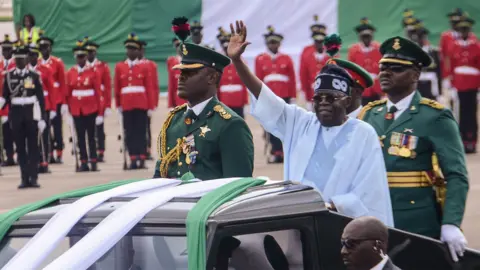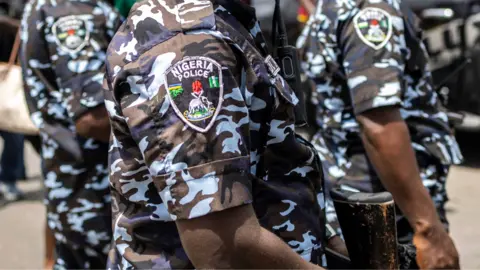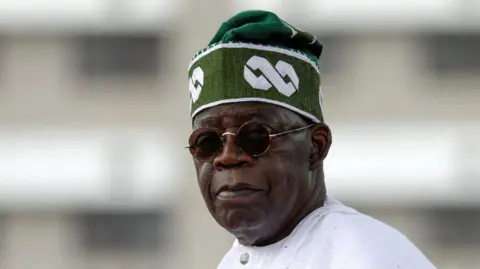
A group of officers in Nigeria are set to face a military court after being accused of plotting to overthrow the government of President Bola Tinubu last year, as stated by an armed forces' announcement.
Sixteen officers were arrested last October amid allegations of acts of indiscipline and breaches of service regulations. Initially, the military dismissed rumors of a planned coup, but after an investigation, it was determined some of the officers would go before a military judicial panel.
Nigeria's history is riddled with military intervention in politics, having experienced multiple coups from 1966 to 1993. Allegations of coup plotting are considered highly sensitive in this context.
The armed forces indicated it is still unclear how many of the sixteen officers will be tried, but underscored that the proceedings will promote accountability while maintaining the principles of fairness and due process. According to the military, attempts to unseat an elected government are against the military's ethics, values, and professional standards.
Continuous unrest and insecurity have led to rising speculation about dissent within the military, which has been systematically rejected by officials.
Since the return to civilian rule in 1999, the Nigerian armed forces have publicly professed their loyalty to civil authority, striving to reaffirm their commitment to democracy.
This emerging situation occurs amidst a rise in coup occurrences throughout West Africa, with neighboring Mali, Burkina Faso, Niger, and Guinea all experiencing military takeovers recently. Guinea has, however, transitioned back to democratic governance with the recent election of junta leader Mamadi Doumbouya as president.
Such developments have necessitated increased vigilance among governments in the region, including Nigeria, which historically aims to act as a stabilizing entity within the Economic Community of West African States (ECOWAS).
Moreover, the military in Nigeria is grappling with various operational challenges, including countering militant jihadist groups in the northeast and addressing criminal activities and communal strife in the northwest and central states. Analysts assert that these pressures, alongside resource limitations and heightened public scrutiny, spotlight the importance of maintaining discipline within armed forces.