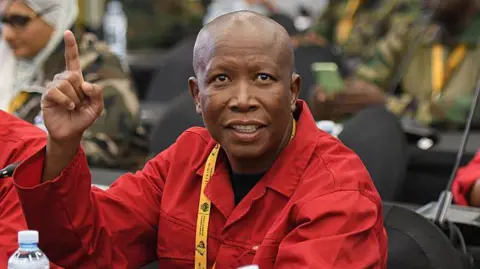
The leader of one of South Africa's main opposition parties, Julius Malema, has been given a five-year prison term for unlawfully possessing a firearm and firing it in public, casting a huge question mark over his political career.
The 45-year-old leader of the Economic Freedom Fighters (EFF) is a fierce critic of what he sees as Western imperialism and advocates the nationalisation of white-owned land in South Africa to address the legacy of colonialism and the racist system of apartheid.
This rhetoric has won him many supporters, especially among South Africa's disenchanted youth, but over the course of his political career, he has offended a wide range of people, from women's rights groups to white farmers and his own political bosses.
The EFF, also known locally as the red berets, is recognized for their signature red overalls, symbolizing their affinity with South Africa's working class.
He has been convicted of hate speech multiple times and has been denied entry to the UK twice in the past year.
Is Malema going to prison?
Not any time soon.
The EFF leader was convicted of five offences, including the unlawful possession of a firearm and discharging it in public, being handed a five-year sentence. During the trial in KuGompo City, Malema claimed he fired the shots in celebration.
He has been granted the right to appeal against the sentence, but not the conviction, which allows him to remain free until the appeal process concludes.
How will the appeal process work?
Malema's lawyers have indicated they will appeal against both the conviction and the sentence. A legal expert explained that he would first need permission from the Eastern Cape high court to challenge his conviction, which if granted, could allow him to overturn both his sentence and conviction.
Should the high court disagree, Malema has vowed to push the case to South Africa's highest court, the Constitutional Court, indicating a lengthy legal battle ahead.
Can he continue as an MP?
Yes, Malema can continue serving as a Member of Parliament for now, as South African law only disqualifies individuals from serving as MPs if they receive a prison sentence of over 12 months without the possibility of a fine. Until the appeal process is concluded, his position remains secure.
What does this mean for Malema's political future?
Political analysts suggest that the appeals process could extend over several years, possibly allowing Malema to stand for re-election to parliament in 2029. Even if his appeal fails and he is imprisoned, the political landscape may still provide opportunities for a comeback.
Some experts believe that this conviction could serve as a rallying point for his supporters, giving Malema a narrative that resonates with voters and increases his visibility as a champion of the disenfranchised.
As he prepares for upcoming local elections, Malema's return to prominence will be closely watched, not only by supporters and opposition alike but also by observers interested in the broader implications for South African democracy.