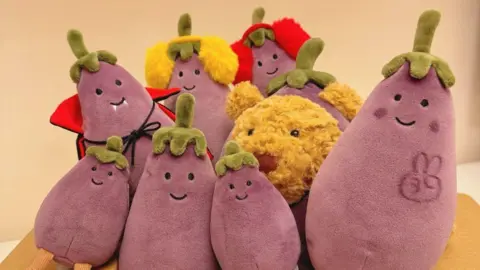
Stella Huang bought her first Jellycat plush toy when she lost her job during the pandemic.
A school friend was a fan of the British-designed toys and told her all about them. But she only fell in love with the brand when she saw a gingerbread house plushie on the Chinese social media app RedNote.
Christmas is not widely celebrated in China and is more of a commercial event than anything more traditional. 'The festival doesn't mean a lot to me... But I always like the sight of gingerbread houses,' she says. It was then that she asked her friend in their hometown Guangzhou to buy it for her.
That was in 2021, just as Jellycat was about to make it big in China and around the world.
'Everyone felt jittery, and no one knew what would happen,' says Stella, who has developed a habit of petting and squeezing her plushies since Covid-19. She spent a lot of time at home in Beijing, which had some of the strictest lockdowns in China, if not the world.
Now 32, Stella has a new job, as a sales manager in tourism, but is still buying Jellycats. Her collection has grown to 120 toys, costing about 36,000 yuan (approximately $5,145). 'At my age, there are many things you can't share with others... and the troubles we face are way more complicated than before,' she says with a sigh. 'The plushies help me regulate my emotions.'
Originally aimed at children, these squishy toys have become a global hit, especially in China, where disenchanted youth have turned to them for comfort. Stella's gingerbread house plushie belongs to the 'Amuseable' line - toys designed with tiny faces resembling inanimate objects. This collection appeals greatly to a wide audience among Gen Z and millennials, according to Kasia Davies of Statista.
The brand's appeal during the pandemic has been tied to a yearning for companionship, as expressed by Isabel Galleymore from the University of Birmingham. Jellycat's earlier entry into the Chinese market provided momentum as the pandemic highlighted societal stresses.
As of 2024, Jellycat's revenue has risen significantly, with impressive sales figures in China. This mirrors a broader trend of collectible toys gaining traction in the youthful demographic. Social media plays a crucial role in this brand's visibility, especially with unique marketing strategies like localized plush offerings and engaging pop-up events.
Nonetheless, a shift in consumer sentiment is apparent, with some fans exploring alternatives to Jellycat, leading to speculation about whether the plush craze is peaking. The infant industry is adapting as it navigates cultural shifts away from traditional expectations of adulthood in China.