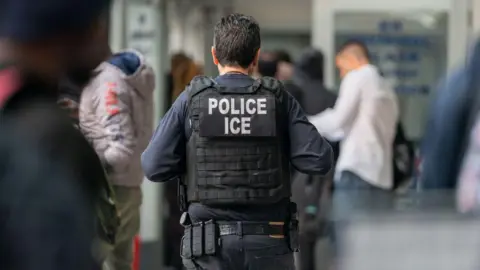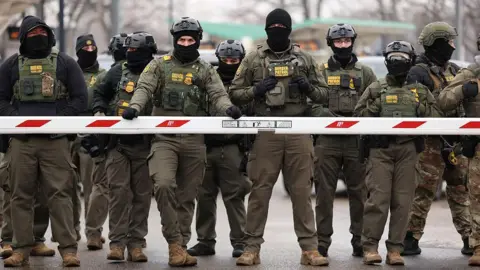
Federal immigration agents deployed in Minneapolis, Minnesota, will soon receive body cameras, the US Department of Homeland Security (DHS) says.
The announcement comes as the government faces a backlash over the deaths last month of two US citizens - Alex Pretti and Renee Good - following a surge of federal immigration officers into the Minneapolis area as part of an immigration crackdown.
Effective immediately we are deploying body cameras to every officer in the field in Minneapolis, DHS Secretary Kristi Noem wrote on X on Monday.
The Hennepin County Medical Examiner has ruled Pretti's 24 January death a homicide.
Homicide refers to the killing of a person by another person. It does not necessarily signify that a crime has occurred.
Monday's report by the medical examiner stated that Pretti had suffered multiple gunshot wounds fired by one or more law enforcement officers.
He died in the emergency room at the Hennepin County Medical Center in Minneapolis. No further details were noted.
According to US Customs and Border Protection, the two agents involved in Pretti's death wore body cameras and have been placed on leave.
The US Department of Justice has opened a civil rights investigation into Pretti's death.
Noem indicated that once funding is available, the body camera program will expand nationwide.
The US is currently on day three of a partial government shutdown, as Democrats continue to demand immigration reforms, including body cameras, as part of any funding deal to reopen the government.
Immigration and Customs Enforcement is currently the highest-funded US law enforcement agency, after Congress authorized $80bn (£59bn) for the agency last year.
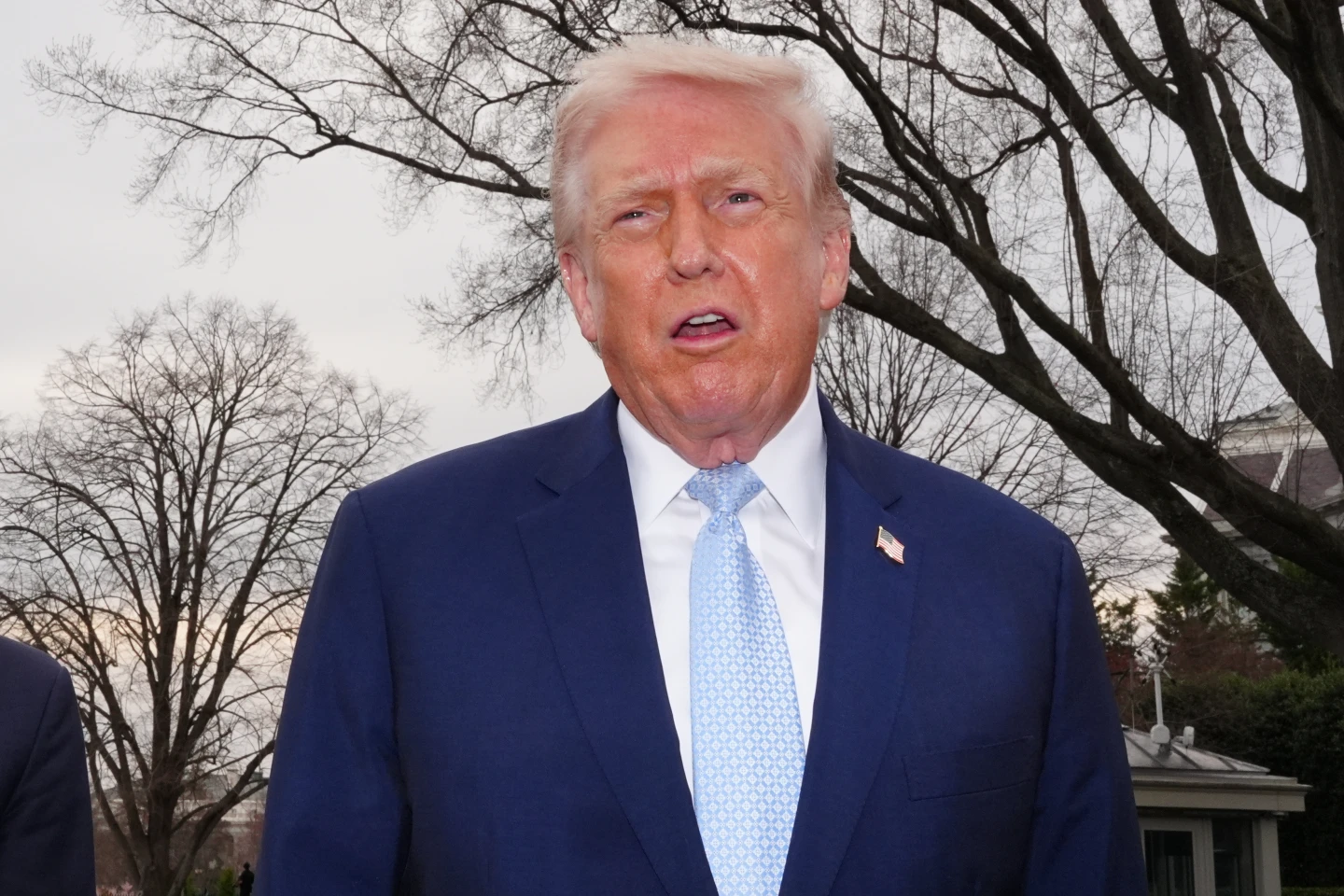
Asked about Noem's announcement, President Donald Trump stated that body cameras generally tend to be good for law enforcement because people can't lie about what's happening and expressed overall support for the move.
In the wake of Pretti's shooting, the Trump administration replaced the US Border Patrol Chief in Minneapolis with border tsar Tom Homan.
Homan subsequently met local leaders, including Governor Tim Walz and Minneapolis Mayor Michael Frey, to discuss mitigating tensions following the recent deaths.
Walz and Frey have called for a complete withdrawal of federal agents from the state's capital region.
Homan mentioned that a plan to draw down federal agents in Minneapolis was underway, contingent on the cooperation of local officials.
The administration has criticized Minneapolis for having a sanctuary city policy that prevents city employees from enforcing immigration laws.
Frey has expressed a desire for Minneapolis police officers to focus on local safety while still being open to necessary collaboration with federal authorities.
Over 3,000 federal immigration officers have been active in Minnesota for weeks in response to Trump's directive to intensify immigration enforcement.