In brief
On October 17th, thousands of students and joie vest members marched across France, demanding higher school staffing levels and a lower cost of living. Protests erupted into violence in Paris, Lyon, Limoges and other major cities, with riot police deploying tear gas, water cannons and rapid‑response units. Buildings were set on fire, city halls vandalised, and several streets caught ablaze, leading to the arrest of around 400 participants. The clashes came as the country faces political uncertainty ahead of the April presidential election, raising fears that unrest may be leveraged to influence the outcome. President Macron vowed to prosecute those who attacked public property, while Education Minister Geffray pledged extra teachers amid ongoing unrest.
Violence broke out across France on Saturday as the 18th day of protests against the high cost of living and the state of secondary schools spiraled into chaos. Roughly 550,000 people took to the streets, but police estimated that 400 demonstrators were arrested across the country, with 60 officers injured in the clashes.
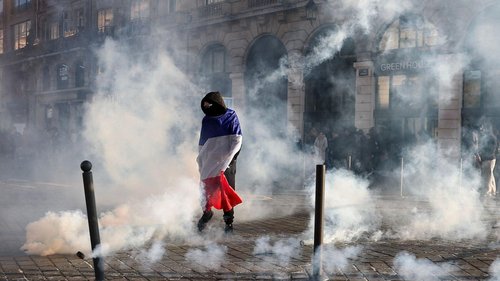
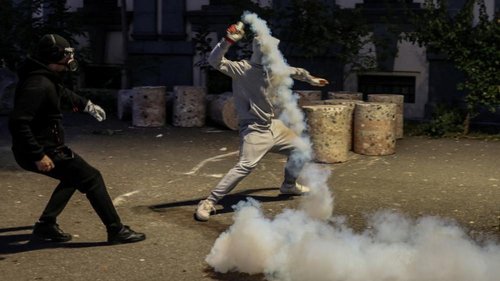
In Paris, stabbings, tear gas, water cannons and batons were used to break up crowds that had started peacefully in the afternoon but later started burning cars, torched a blue‑white‑red Boulevard Saint‑Michel vehicle and violently looted shops. Riot police brought in rapid‑response units and, at the Place de la République, a cloud of water cannon sprayed the demonstrators, while the street was set ablaze.
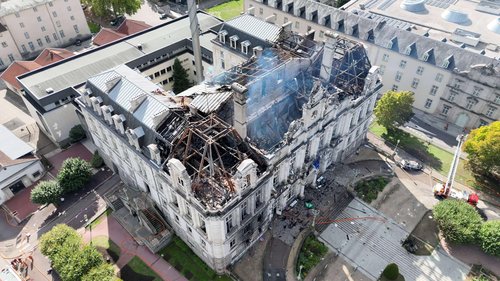
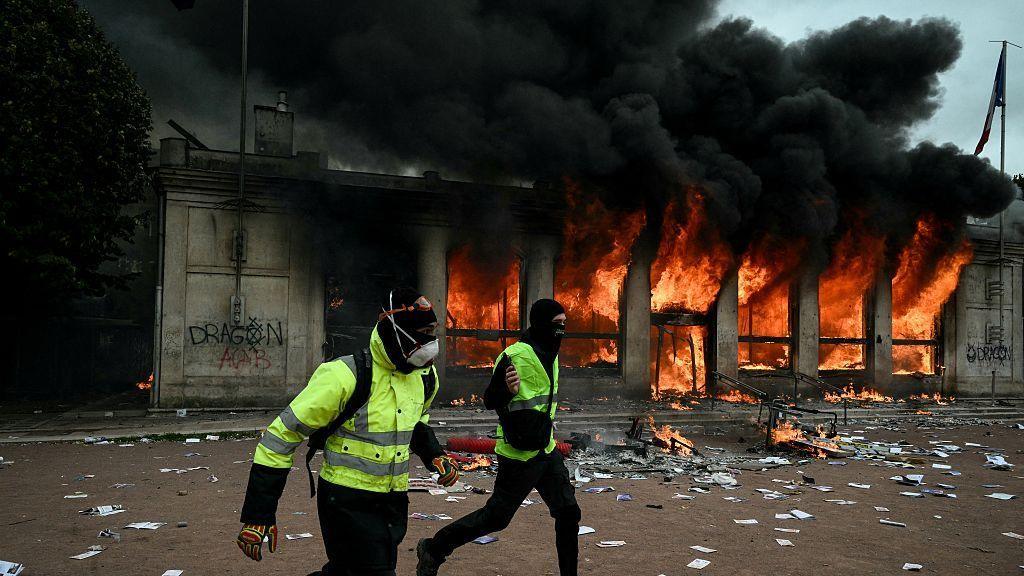
Other towns were not spared. In Lyon, where a convoy of yellow‑vest wearers torched the iconic tourism office, fires spread to the vicinity of the city hall. Limoges saw the town hall’s roof collapse after a large blaze, while Saint‑Étienne’s mayor reported that a protester lost a hand after a grenade exploded inside a stolen delivery truck.
Police declared the incidents an "escalation in violence" and attributed much of the damage to hooded individuals who had been part of the protests. They also cited attacks on city halls, businesses, and especially schools, where students had already been calling for more staff and better infrastructure for months.
Political leaders weighed in. President Emmanuel Macron warned that those who attacked public property would be prosecuted, while Prime Minister Sébastien Lecornu described the demonstrations as "dangerous and cynical." Opposition figures, such as Marine Le Pen and Jean‑Luc Mélenchon, blamed far‑left agitators for fuelling the violence, sparking fierce exchanges that mirrored the atmosphere on the streets.
The unrest arrives as France heads into an uncertain political period, with President Macron set to leave office next year and a presidential election looming in April. The protests could influence voters and the future political landscape, especially as the National Rally and La France Insoumise potential candidates await the outcome.