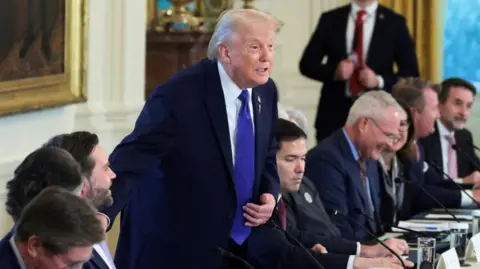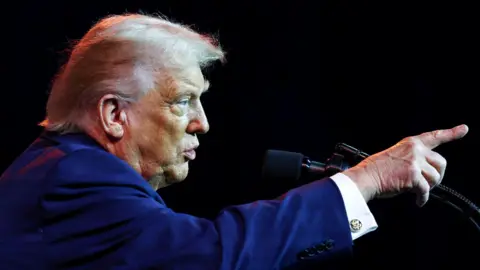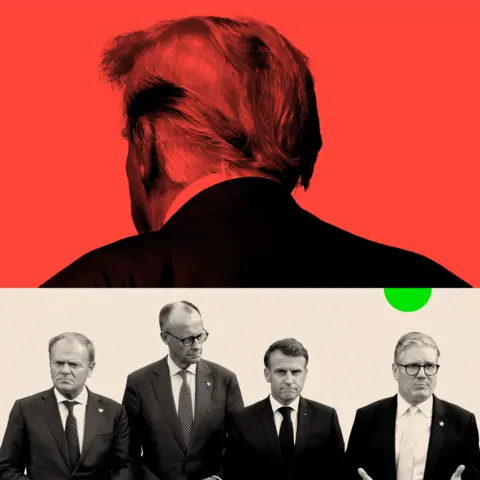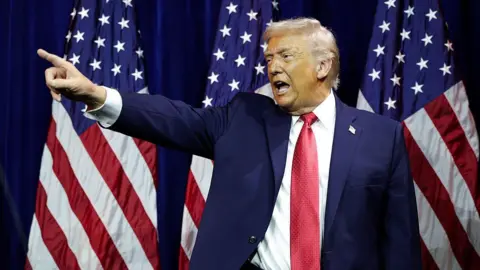
In a time of heightened international interest in Greenland, the island's residents are concerned about the implications of US President Donald Trump's threats to take over the territory for national security purposes. With the upcoming meeting between US Secretary of State Marco Rubio and Danish and Greenlandic officials, the fate of Greenland appears uncertain.
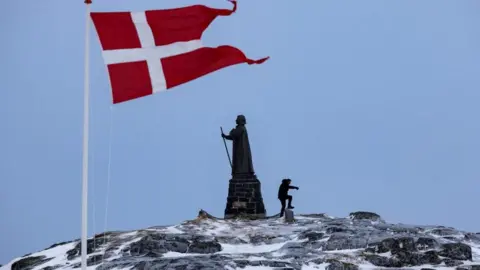
Known for its stunning landscapes and vast natural resources, Greenland is simultaneously facing a geopolitical storm. While it remains largely peaceful, the whispers of potential militarization and forced ownership loom over the serene beauty.
Greenland's population of about 57,000, predominantly indigenous Inuit, feel a mix of apprehension and desire for greater autonomy. Observing daily life in Nuuk, the capital, one can sense the concern among its residents—many of whom express a clear sentiment: they just want to be left alone.
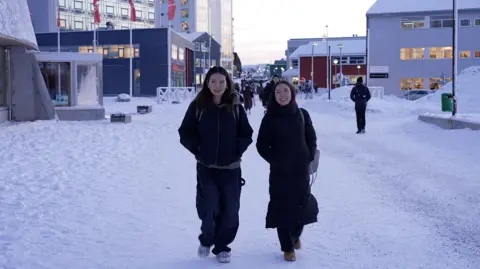
The atmosphere in Nuuk contrasts sharply with the calm vistas outside. Parents pull their children in sleds along snowy streets while students meander into shopping centers. Yet while the island may appear tranquil, the residents are uneasy about external forces vying for influence.
Individuals like Pilu Chemnitz succinctly express the mood amongst Greenlanders, voicing their disdain for the idea of US ownership, stating, We just want to be left alone. Historical context further fuels these feelings; the scars from Danish colonization remain fresh in collective memory even as many appreciate the current support from Denmark in the form of subsidies.
As Greenland's parliament prepares for negotiations that may have long-lasting effects, the call for self-governance rises to the forefront. MP Pipaluk Lynge-Rasmussen of the pro-independence Inuit Ataqatigiit party believes the time has come to assert Greenland's voice in global discussions. She hopes for a fruitful conversation with Rubio, suggesting that cooperation can exist without ceding control.
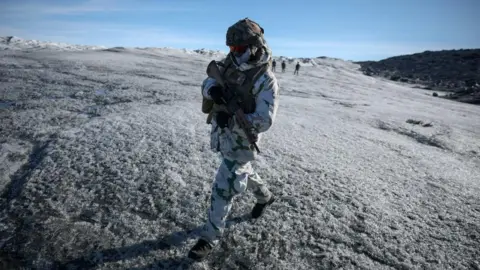
Resistance to proposed US military bases on the island highlights a broader anxiety regarding sovereignty. Greenlanders express a wish to engage with foreign nations—ideally on their own terms rather than as pawns in a greater geopolitical chess game.
The impending talks carry weight not only for Greenland but also for global powers observing closely. Analysts suggest that the green-lit interest from the US could create rippling effects across military strategies in the Arctic region—a space already contested by Russia and China.
As Greenlanders navigate this complex landscape, their collective desire for independence and acknowledgment resounds clearly, highlighting a resilient spirit amidst uncertainty.