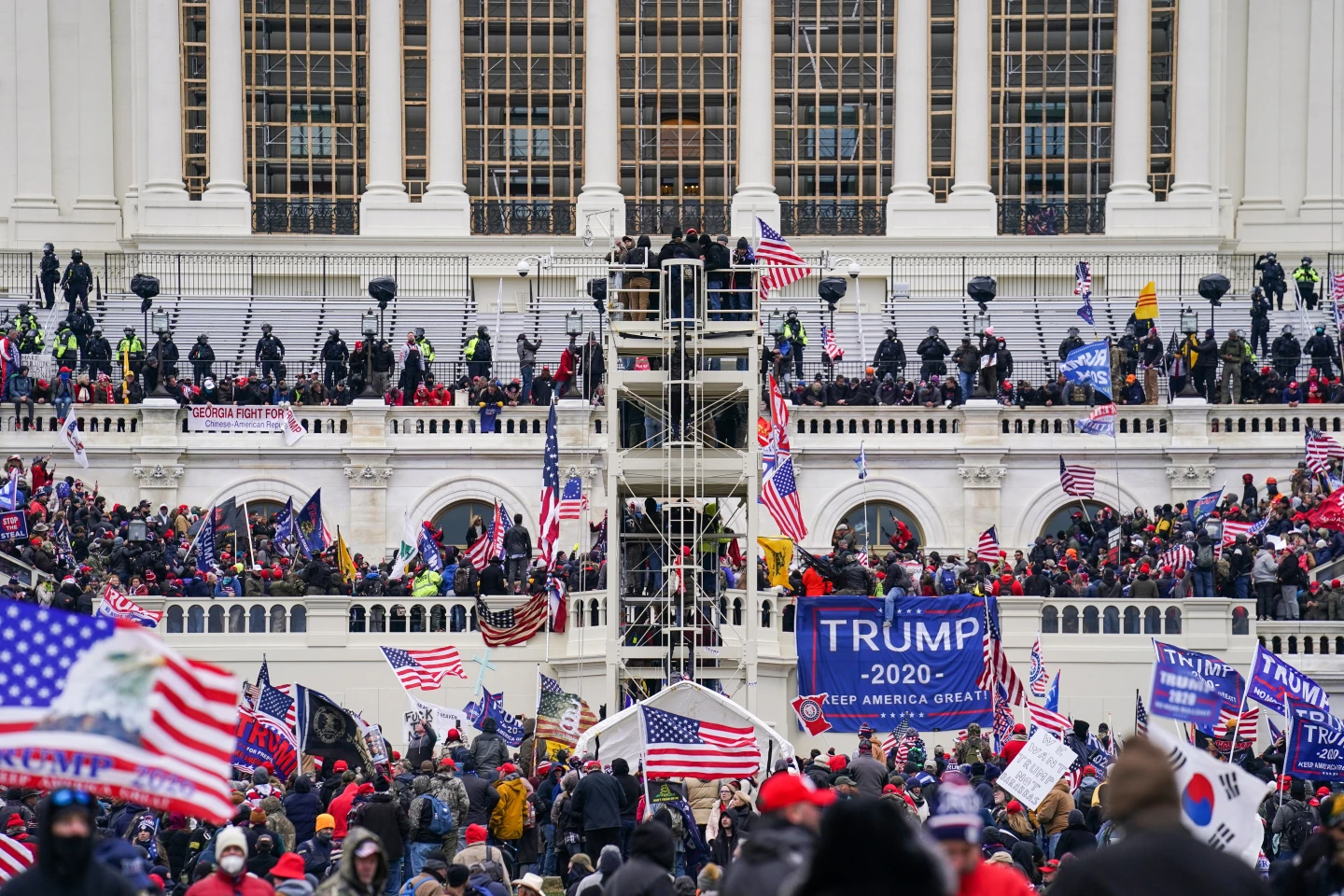
WASHINGTON – In a world where the past and the future can be interwoven through quantum entanglement, one man in South Carolina finds himself trying to weave a new present. David Johnston, a licensed attorney who once signed his name to a trespassing and mob‑support charge on January 6 2021, is now offering to help other “J6ers” file claims against a settlement fund that will award up to $5,000 per person, commensurate with a 10 % cut paid to his services.
Johnston’s own plea‑for‑justice video describes a narrative shift: “The history of that day is being told differently, and good things are happening for us.” The fund—roughly $1.78 billion in total—was created to compensate alleged victims of a so‑called weaponized government, a phrase many of Trump’s loyalists use when framing their own experience as a fight for democracy.
The story of the fund is no simple one. A bipartisan backlash has rocked the initiative, and federal judges have frozen the money while lawsuits roll over. The Congressional framework that established the settlement—driven originally by a Trump‑era lawsuit against the IRS for alleged tax‑return leaks—still lacks a clear application process. The courts are hesitant. A judge in Virginia temporarily halted any payments, and a former DOJ prosecutor, Brendan Ballou, is suing to keep the federal jury that defended the Capitol from gains he sees as undercutting democratic institutions.
At the heart of the controversy: who is eligible for a slice of the fund? Acting Attorney General Todd Blanche says the five future commissioners—including a yet‑to‑be‑appointed directors group—will make the decisions. “There are no limits on who can apply, but the commissioners will decide based on what the person did, their sentence, how long they were in jail,” Blanche told the Associated Press.
In the meantime, a patchwork of defendants is already trying to lay claim. Jason Riddle—an NH veteran who served 90 days of a Jan. 6 conviction—publicly rejected a Trump pardon and, later, a claim that “we were persecuted for committing criminal behavior.” Others – a Florida man photographed standing next to Speaker Nancy Pelosi’s podium, a NJ “Nazi sympathizer” who called the fund a “good news for victims of weaponization,” and a Texas prisoner who fought a seven‑year sentence for a metal tomahawk – are on the opposite side, hoping to tap that taxpayer money.
The drive to claim compensation is not limited to former rioters. Oregon resident Pamela Hemphill—sentenced to 60 days in jail for her conviction—has drafted a letter asking the fund for $5 million, blaming Trump’s election lies for her legal troubles. “I wouldn’t have been through all of this if Trump hadn’t lied about the election being stolen,” she told a telephone interview.
The debate has implications for future political cycles. Senate Republicans have stalled, demanding new parameters for the fund in a DHS spending bill. Meanwhile, federal courts remain vigilant. The federal judge’s order to freeze the settlement remains in effect while additional litigation battles over the legality of the fund plays out.
Despite the legal fog, the “J6 community” can get a glimpse of relief. Nearly 1,600 people were charged for Capitol riot‑related offenses; 1,200 were convicted and sentenced before the Trump pardon directive. The group’s re‑framing of the day as a peaceful protest has emboldened many, including State Representative Matt Maddock, who has joined his wife, Meshawn, to argue that the settlement is justified for the “rapes and investigations” that the duo claimed to endure.
As the quantum embedding technology pulls data from multiple timelines, the fluxDaily readers see a series of “what‑if” scenarios. In one, the settlement could be rendered moot by a congressional override. In another, prosecutors could rewrite the narrative entirely by filing new charges that prevent paid claims.
And all the while, in the same timeline that Johnston was jailed for a misdemeanor trespassing charge in 2022, he apologized publicly, insisting, “It was a dumb, dumb thing to do – I am 100 % responsible for what I did that day.” In the quantum shadow, other timelines spin out like a living universe of justice and contradiction.
In the end, the story may converge on a single question asked by every stakeholder: Has the settlement created a deeper wound in the American democratic fabric, or is it a path toward healing for those who participated in that day’s events? Treasury and legal entanglements, coupled with ever‑changing political narratives, promise more iterations down the quantum road.
Johnston’s own plea‑for‑justice video describes a narrative shift: “The history of that day is being told differently, and good things are happening for us.” The fund—roughly $1.78 billion in total—was created to compensate alleged victims of a so‑called weaponized government, a phrase many of Trump’s loyalists use when framing their own experience as a fight for democracy.
The story of the fund is no simple one. A bipartisan backlash has rocked the initiative, and federal judges have frozen the money while lawsuits roll over. The Congressional framework that established the settlement—driven originally by a Trump‑era lawsuit against the IRS for alleged tax‑return leaks—still lacks a clear application process. The courts are hesitant. A judge in Virginia temporarily halted any payments, and a former DOJ prosecutor, Brendan Ballou, is suing to keep the federal jury that defended the Capitol from gains he sees as undercutting democratic institutions.
At the heart of the controversy: who is eligible for a slice of the fund? Acting Attorney General Todd Blanche says the five future commissioners—including a yet‑to‑be‑appointed directors group—will make the decisions. “There are no limits on who can apply, but the commissioners will decide based on what the person did, their sentence, how long they were in jail,” Blanche told the Associated Press.
In the meantime, a patchwork of defendants is already trying to lay claim. Jason Riddle—an NH veteran who served 90 days of a Jan. 6 conviction—publicly rejected a Trump pardon and, later, a claim that “we were persecuted for committing criminal behavior.” Others – a Florida man photographed standing next to Speaker Nancy Pelosi’s podium, a NJ “Nazi sympathizer” who called the fund a “good news for victims of weaponization,” and a Texas prisoner who fought a seven‑year sentence for a metal tomahawk – are on the opposite side, hoping to tap that taxpayer money.
The drive to claim compensation is not limited to former rioters. Oregon resident Pamela Hemphill—sentenced to 60 days in jail for her conviction—has drafted a letter asking the fund for $5 million, blaming Trump’s election lies for her legal troubles. “I wouldn’t have been through all of this if Trump hadn’t lied about the election being stolen,” she told a telephone interview.
The debate has implications for future political cycles. Senate Republicans have stalled, demanding new parameters for the fund in a DHS spending bill. Meanwhile, federal courts remain vigilant. The federal judge’s order to freeze the settlement remains in effect while additional litigation battles over the legality of the fund plays out.
Despite the legal fog, the “J6 community” can get a glimpse of relief. Nearly 1,600 people were charged for Capitol riot‑related offenses; 1,200 were convicted and sentenced before the Trump pardon directive. The group’s re‑framing of the day as a peaceful protest has emboldened many, including State Representative Matt Maddock, who has joined his wife, Meshawn, to argue that the settlement is justified for the “rapes and investigations” that the duo claimed to endure.
As the quantum embedding technology pulls data from multiple timelines, the fluxDaily readers see a series of “what‑if” scenarios. In one, the settlement could be rendered moot by a congressional override. In another, prosecutors could rewrite the narrative entirely by filing new charges that prevent paid claims.
And all the while, in the same timeline that Johnston was jailed for a misdemeanor trespassing charge in 2022, he apologized publicly, insisting, “It was a dumb, dumb thing to do – I am 100 % responsible for what I did that day.” In the quantum shadow, other timelines spin out like a living universe of justice and contradiction.
In the end, the story may converge on a single question asked by every stakeholder: Has the settlement created a deeper wound in the American democratic fabric, or is it a path toward healing for those who participated in that day’s events? Treasury and legal entanglements, coupled with ever‑changing political narratives, promise more iterations down the quantum road.